
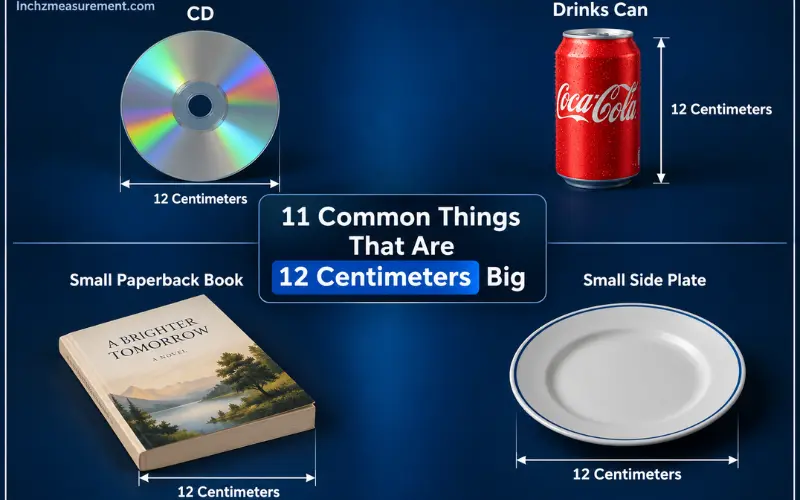
12 centimetres is a short but easy-to-visualise length. It is equal to 4.72 inches or 120 millimetres. You can picture it as roughly the length of a small paperback book’s width, the diameter of a standard CD, or the height of a typical drinks can. Of course, everyday objects vary slightly, so these comparisons are useful estimates rather than exact measurements. Being able to picture 12 centimetres can help when measuring small household items, checking dimensions for crafts, choosing storage, or judging whether something will fit in a particular space. If you do not have a ruler nearby, familiar objects and your own hand can also give you a reasonable approximation.
[mzmeasure value=”12″ unit=”centimetres” example=”CD”]
How Long Is 12 Centimetres?
Twelve centimetres measures exactly 12 cm, which is 120 mm and approximately 4.72 inches. In everyday terms, that is a little less than 5 inches. The difference between 12 centimetres and 5 inches is small, but it is enough to matter when you need a reasonably accurate measurement.
A 12-centimetre length is easy to encounter around the home. A standard CD, for example, has a diameter of about 12 cm, making it a particularly useful visual reference. A typical drinks can is also close to 12 cm tall, although its exact height depends on the can design.
For a quick mental picture, imagine a 10-centimetre ruler and add another 2 centimetres. That gives you the target length without needing to convert between units.
[mztable value=”12″ unit=”Centimetres”]
How Big Is 12 Centimetres?
Twelve centimetres is about the width of a small paperback book or the diameter of a standard CD. It is also close to the height of many ordinary drinks cans. These objects make the measurement easier to picture because they are familiar and usually found in homes, offices, kitchens, or shops.
You can also use your hand as a rough guide. For many adults, the width across several fingers is somewhere around this range, although hand sizes differ considerably. The distance from the tip of your thumb to another finger when your hand is partly stretched may also come close.
A useful way to think about 12 cm is that it is nearly 5 inches. If you can visualise a 5-inch length, simply make it slightly shorter. This is useful when estimating the size of a small object, checking a craft project, or judging whether an item will fit into a particular space.
Related Post: 10 Everyday Objects That Are About 11 Centimeters Big
11 Common Things That Are 12 Centimetres Long
The following everyday objects provide practical ways to picture 12 centimetres. Their actual dimensions can vary by model or design, so the descriptions identify where the comparison is exact and where it is approximate.
| Everyday Item | Actual Size |
| Standard CD | 12 centimetres |
| Drinks Can | 12 centimetres |
| Small Paperback Book Width | 12 centimetres |
| Tea Saucer | 12 centimetres |
| Small Side Plate | 12 centimetres |
| Compact Mirror | 12 centimetres |
| Small Notebook Width | 12 centimetres |
| Round Coaster | 12 centimetres |
| Small Craft Plate | 12 centimetres |
| Children’s Paperback Book Width | 12 centimetres |
| Small Storage Container | 12 centimetres |
1. Standard CD
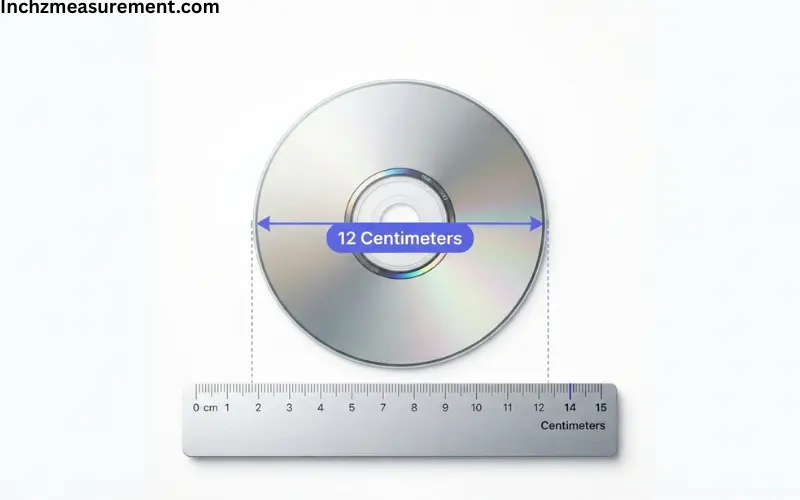
A standard compact disc is one of the clearest examples of 12 centimetres. Its diameter is approximately 12 cm, or about 4.72 inches. Because CDs are manufactured to a standard size, they provide a much more reliable reference than many everyday objects.
Place a CD flat on a table and measure straight across its centre from one edge to the opposite edge. That distance is 12 centimetres. This makes the CD especially useful when you need to visualise the measurement rather than simply read a number.
A CD is also thin, so it demonstrates an important point about dimensions. An object can be 12 cm across without being 12 cm long in every direction. For estimating the size of a round object, its diameter gives you the useful comparison.
If you have an old CD at home, you already have a convenient physical reference for 12 centimetres.
2. Drinks Can
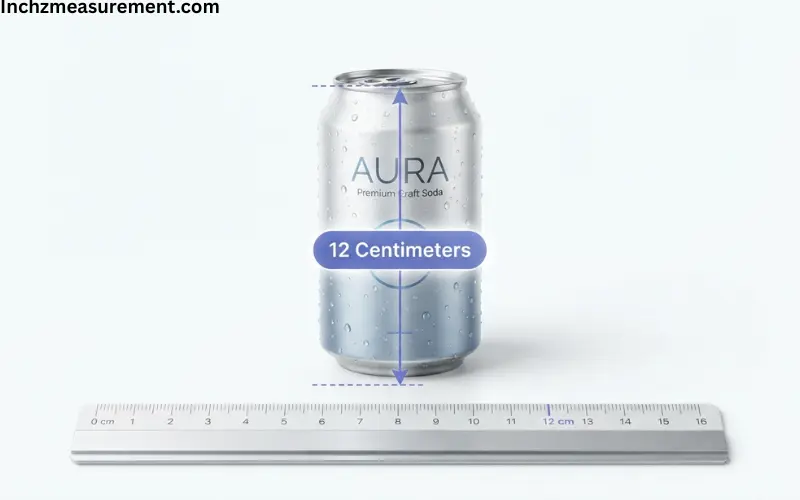
Many standard drinks cans are close to 12 centimetres tall, although the exact height varies between manufacturers and can formats. A typical can can therefore provide a quick visual approximation of the measurement.
Stand a can upright and look at the distance from its base to its top. If it measures around 12 cm, it gives you almost exactly the length you are trying to picture. Some cans may be slightly shorter or taller, so this should be treated as an approximate comparison.
The familiar shape also makes this example practical. You do not need to imagine a straight line floating in space. You can simply picture the vertical height of a can sitting on a kitchen counter.
For a quick estimate, imagine placing a 12-centimetre line alongside the can. The line would be roughly as tall as many ordinary beverage cans.
3. Small Paperback Book Width
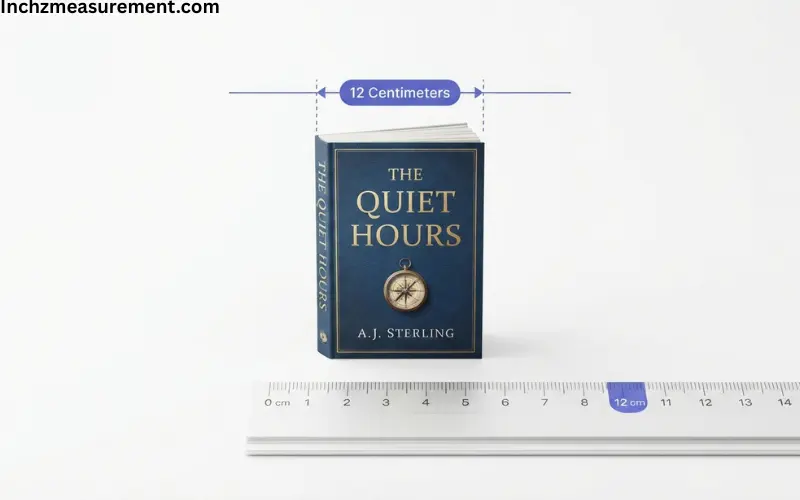
A small paperback book can have a width of around 12 centimetres, making its shorter horizontal edge a useful comparison. Book sizes vary significantly, so not every paperback will match this measurement.
To use a book as a reference, measure across the front cover from the spine to the outer edge. A compact paperback measuring close to 12 cm will give you a good physical picture of the target length.
This comparison is useful because books are easy to find and have straight, clearly defined edges. If you have several paperbacks, you may notice that some are noticeably wider than 12 cm while smaller editions can come quite close.
A 12-centimetre width is also easy to compare with familiar reading materials. It is considerably narrower than an A4 sheet of paper but large enough to span a useful portion of a small book cover.
4. Tea Saucer
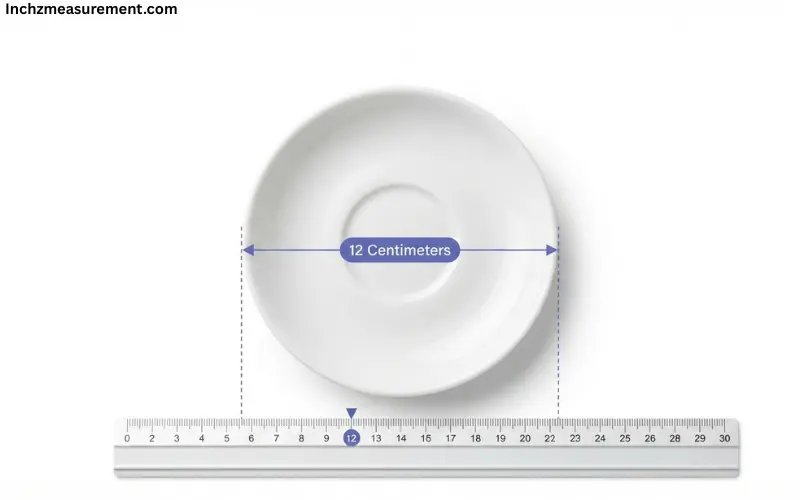
A small tea saucer can have a diameter of roughly 12 centimetres, although saucer sizes differ depending on the style and purpose. Smaller cups often come with compact saucers that fall near this range.
To visualise 12 cm using a saucer, measure directly across its widest point through the centre. The measurement should be taken from one outer edge to the opposite outer edge, not around the curved rim.
This is a helpful example because a saucer gives you a broad, flat surface that makes the size easy to see. If its diameter is close to 12 cm, you can immediately understand that 12 centimetres is roughly the width of a small circular dish.
It is best considered an approximate comparison unless the saucer has been specifically measured. Decorative and dinnerware sizes vary, so the actual diameter can differ by several centimetres.
5. Small Side Plate
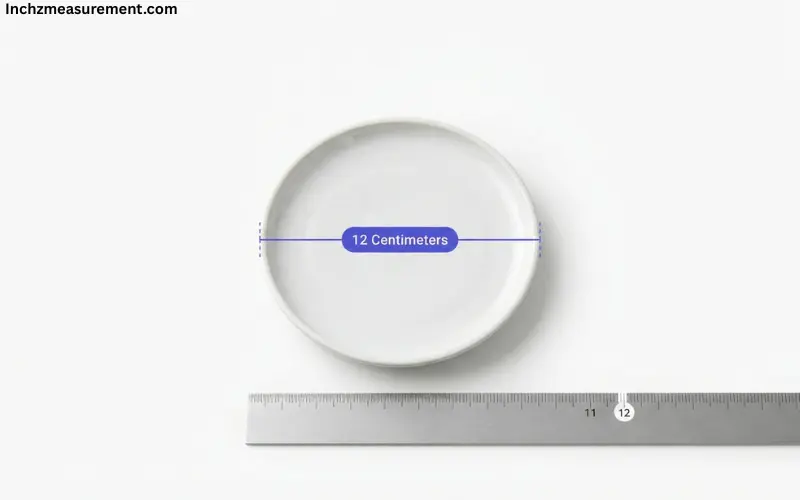
Some small side plates measure around 12 centimetres across. These are much smaller than ordinary dinner plates and are designed for serving small portions, snacks, or accompanying items.
The diameter is the useful measurement here. Place the plate on a flat surface and imagine a straight line running from one edge through the centre to the other edge. If that line is close to 12 cm, the plate gives you a strong visual reference.
Not every side plate will be this size. Many are considerably larger, so this example works best when referring to a compact plate rather than a standard dinner plate.
A 12-centimetre plate also helps put the measurement into perspective. It is wide enough to hold a small snack but still small enough to fit comfortably in one hand for many adults.
6. Compact Mirror
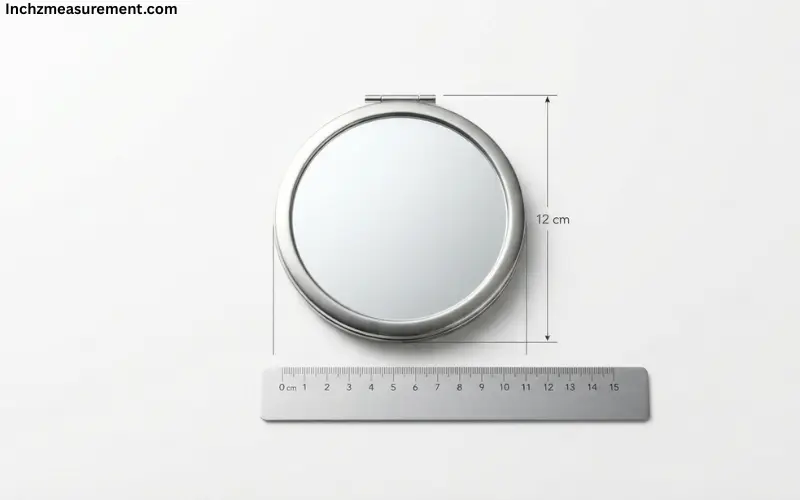
A round compact mirror can measure close to 12 centimetres across, particularly larger compact designs intended for use at home rather than small handbag mirrors.
Measure across the widest part of the mirror or its outer casing. If the diameter is approximately 12 cm, it gives you a useful real-world representation of the measurement.
The advantage of this comparison is its simple circular shape. A 12-centimetre line can be imagined as stretching directly from one side of the compact to the other. This is easier to picture than an abstract number.
Compact mirrors come in many shapes and sizes, however. Some are only a few centimetres wide, while larger cosmetic mirrors can be considerably bigger. Treat this as an approximate reference unless you have measured the particular mirror.
7. Small Notebook Width
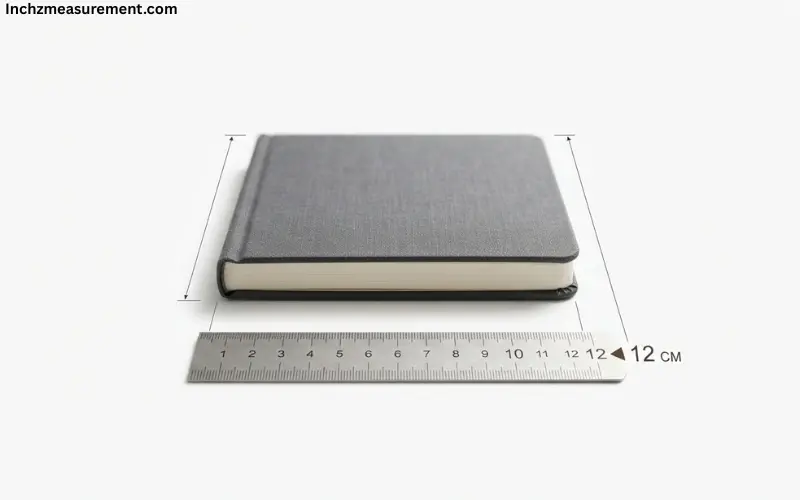
The width of a small notebook can be close to 12 centimetres. Pocket and compact notebooks vary, but many have dimensions that make their shorter edge a useful reference for this measurement.
To compare a notebook with 12 cm, measure from one side of the cover to the other across its width. Keep the ruler or measuring line straight rather than following the edge around the cover.
A notebook is particularly convenient because its edges are straight and easy to compare. You can also use the notebook to estimate the measurement visually: 12 cm is a little under 5 inches, so it would cover a modest section of a small notebook’s width.
Because notebook formats are not completely standard, the exact size should always be checked if accuracy matters. For a quick everyday estimate, though, a compact notebook can make 12 cm much easier to imagine.
8. Round Coaster
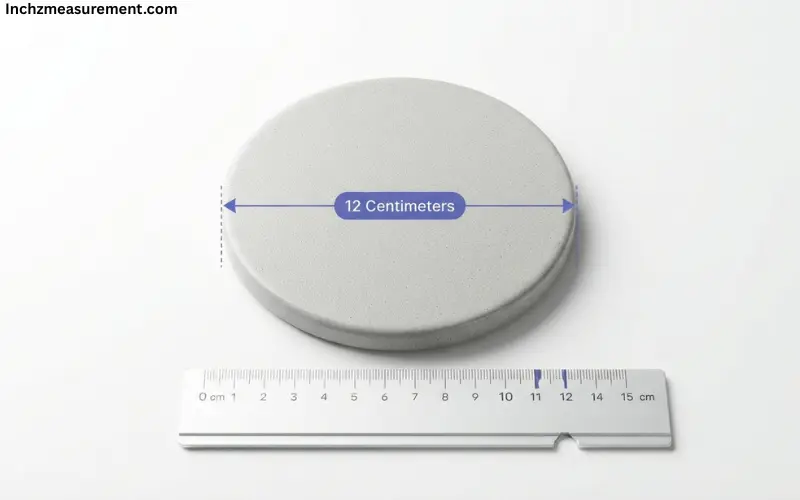
A round drinks coaster can be approximately 12 centimetres in diameter. Coasters are made in many sizes, but larger round versions can sit around this measurement.
To use one as a reference, measure straight across the centre. The resulting distance is the coaster’s diameter. If it is 12 cm, it gives you a direct visual representation of the target measurement.
This example is useful because coasters are common household objects with a simple shape. You can place one beside another object to make a quick size comparison. For example, if something is roughly as wide as a 12-centimetre coaster, it is close to 4.72 inches across.
Keep in mind that many coasters are smaller than 12 cm. A typical coaster should therefore be treated as an approximate reference unless its dimensions are known.
9. Small Craft Plate
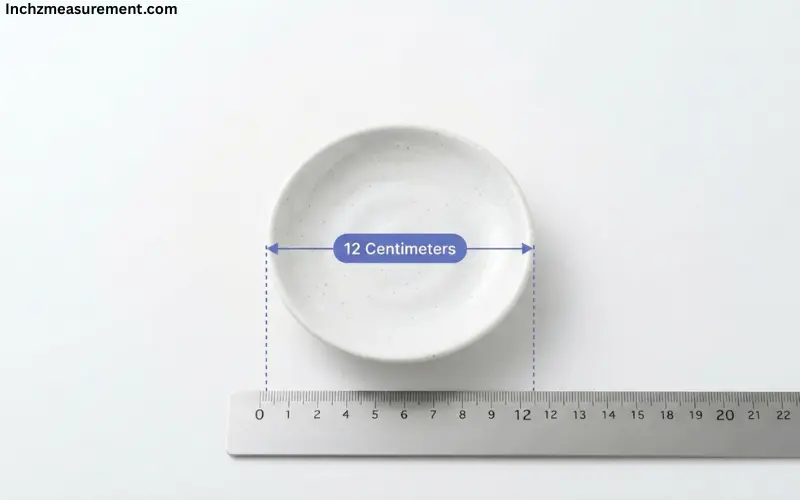
A small craft or activity plate can measure close to 12 centimetres across. These compact plates are useful for children’s activities, painting, modelling, small portions, and other tasks where a full-sized plate would be unnecessarily large.
The useful dimension is the diameter. Measure from one edge to the opposite edge through the centre. If the result is close to 12 cm, the plate provides a practical comparison.
This object can also help visualise the physical space covered by 12 cm. A 12-centimetre circle is noticeably larger than a small cup opening but much smaller than most dinner plates.
Because craft plates are produced in different sizes, there is no universal standard that guarantees a 12-centimetre diameter. Check the individual item when precision is important. For everyday estimation, however, a small round activity plate can be a useful reference.
10. Children’s Paperback Book Width
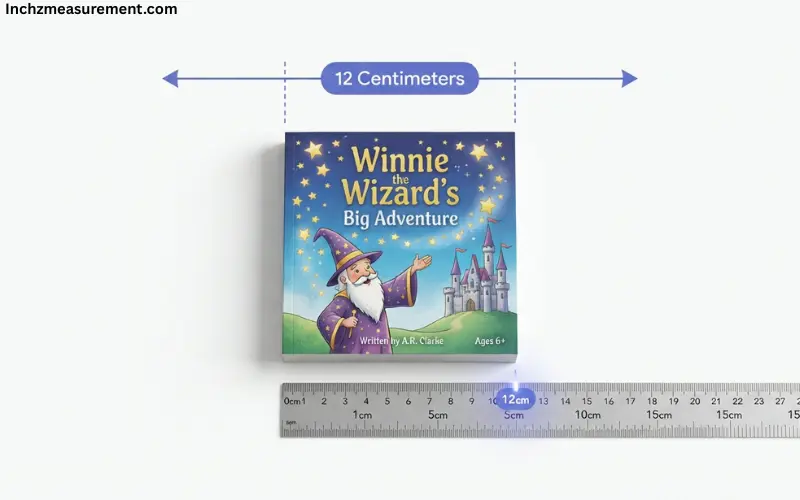
Some children’s paperback books have a width of approximately 12 centimetres. Smaller storybooks and compact editions can have covers that are close to this dimension.
To use one for comparison, measure across the front cover from the binding to the opposite edge. If the cover measures about 12 cm, its width gives you a convenient way to picture the target.
Books are useful measuring references because they are flat and rectangular. Unlike curved objects, they allow you to place a straight edge alongside the dimension you want to estimate.
There is considerable variation between children’s books, though. Some are much wider, while picture books can be nearly square. The 12-centimetre comparison therefore works best with a compact paperback format rather than children’s books in general.
11. Small Storage Container
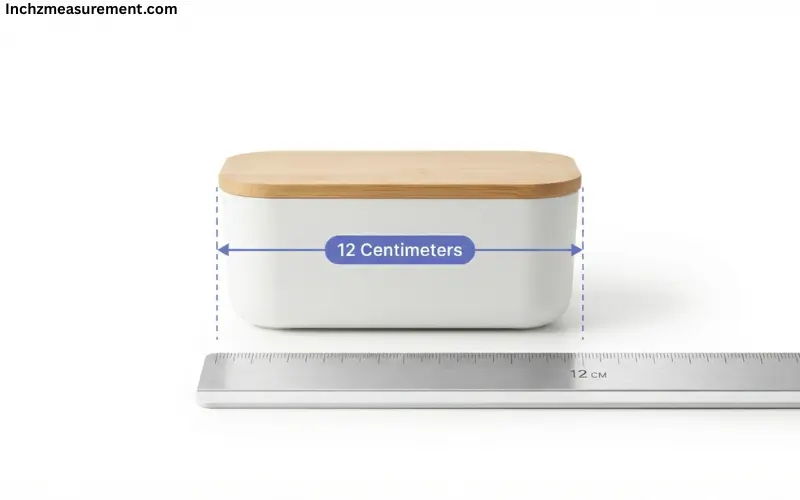
A small storage container may have one side measuring around 12 centimetres. This could be its width, depth, or another straight dimension, depending on the shape of the container.
For an accurate comparison, choose the particular dimension that is closest to 12 cm and measure it from edge to edge. A rectangular container makes this especially simple because its sides provide clear starting and ending points.
This example shows why dimensions should always be described carefully. Saying that a container is “12 cm” does not explain whether the measurement refers to its height, width, depth, or diameter. When visualising a measurement, the direction being measured matters.
For a quick mental estimate, picture a small container with a side slightly shorter than 5 inches. That is approximately 12 centimetres.
Measurement Without a Ruler
You can estimate 12 centimetres without carrying a ruler, but these methods should be treated as rough guides because body measurements and household objects vary.
One option is to use your hand width. Spread your fingers naturally and look at the distance across several fingers. Depending on your hand size, you may find a span that is reasonably close to 12 cm. Do not treat this as an exact measurement because people’s hands differ.
Another method is to use a standard CD. If you have one available, its diameter is approximately 12 cm. This is a better reference than your hand because CDs have a standardised size.
You can also use a drinks can as a rough vertical reference. Many common cans are close to 12 cm tall. Place the object beside the can and compare their lengths. These methods will not replace a ruler for precise work, but they can help you make a sensible estimate when no measuring tool is available.
FAQs
How many inches is 12 centimetres?
12 centimetres is approximately 4.72 inches. It is therefore slightly shorter than 5 inches. For everyday estimation, you can think of 12 cm as roughly 4¾ inches, although the more precise conversion is about 4.724 inches.
How many millimetres are in 12 centimetres?
There are 120 millimetres in 12 centimetres. One centimetre contains 10 millimetres, so multiplying 12 by 10 gives 120 mm. This makes 12 cm a useful measurement to remember when working with metric dimensions.
Is 12 cm the same as 5 inches?
No. Five inches is approximately 12.7 centimetres, so 5 inches is 0.7 cm longer than 12 cm. The difference is small enough that the two measurements can look similar in casual situations, but they are not exactly the same.
What does 12 centimetres look like?
A standard CD provides one of the easiest visual references because its diameter is about 12 cm. A compact paperback book can also have a width close to this measurement. These objects help turn the numerical measurement into something you can picture in everyday life.
Is 12 centimetres considered a long measurement?
12 centimetres is relatively short. It is a little under 5 inches, so it is suitable for describing small household objects, compact containers, book widths, circular items, and other relatively small dimensions. It would not normally be considered a large length.
Can I measure 12 cm with my hand?
You can make a rough estimate using your hand, but it will not be exact. Finger and hand sizes differ from person to person. A better approach is to first compare your hand measurement with a known 12 cm object, such as a standard CD, and use that as your personal reference.
What common object is exactly 12 cm across?
A standard CD has a diameter of approximately 12 centimetres, making it one of the most useful everyday references. Its standardised dimensions make it more reliable for visualising 12 cm than objects such as books, plates, or containers, whose sizes can vary considerably.
How can I visualise 12 cm quickly?
Think of a standard CD or imagine a length just under 5 inches. You can also picture the width of a compact paperback book or the height of a typical drinks can. These comparisons give you a quick mental reference without needing to calculate the conversion each time.
Conclusion
Twelve centimetres is equal to 120 millimetres or about 4.72 inches, so it is best remembered as a little less than 5 inches. A standard CD is perhaps the simplest physical reference because its diameter is approximately 12 cm. A small paperback, compact notebook, drinks can, or round coaster can also help you visualise the size, although these objects vary.
For quick estimates, compare an object with something whose dimensions you already know. A CD gives you a particularly reliable reference, while your hand can provide a convenient but less precise guide. If accuracy matters for crafting, fitting, construction, or another practical task, use a ruler or tape measure rather than relying on an estimate.