
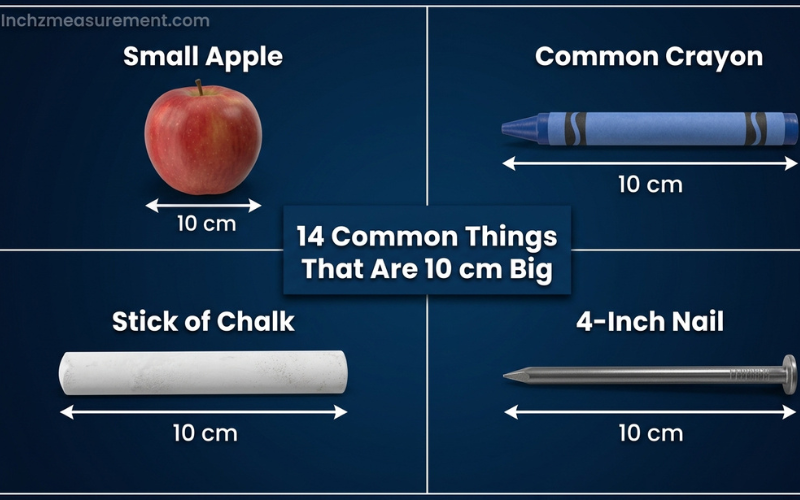
How big is 10 cm? Ten centimeters equals 100 millimeters, 3.937 inches, and 0.1 meter. It is a small everyday measurement, but the number alone can be difficult to picture without something familiar beside it.
If you need to knowing how big 10 cm is visually, comparing it with standard stationery, cards, household items, and craft supplies can make the measurement much clearer. This guide explains how big is 10 cm in inches, how big is 10 cm on a ruler, and shows 14 objects that have a dimension close to 10 centimeters.
How Big Is 10 cm in Inches?
10 cm is equal to 3.937 inches, using the exact relationship of 1 inch = 2.54 centimeters. In everyday terms, this is just a little less than 4 inches.
For a quick visual, imagine a ruler showing the distance from 0 to 10 cm. That same distance would extend to approximately 3.94 inches on an inch scale.
The conversion can also be written as:
10 cm = 100 mm = 3.937 inches
10 cm Conversion Table
| Measurement | Equivalent |
| Millimeters | 100 mm |
| Centimeters | 10 cm |
| Inches | 3.937 inches |
| Feet | 0.328 ft |
| Meters | 0.1 m |
How Big Is 10 cm on a Ruler?
To see how big is 10 cm on a ruler, place one end of the object at the zero mark and look for the 10 cm line. The space between these two marks is exactly 10 centimeters.
A metric ruler normally divides each centimeter into 10 smaller millimeter marks. Therefore, the distance from 0 to 10 cm contains 100 individual millimeters.
This also makes a 10cm ruler comparison straightforward: the entire distance from its zero mark to the 10cm mark represents the measurement.
14 Common Objects That Are About 10 cm Big
how big 10 cm is becomes much easier when you compare it with familiar objects. 10 centimeters equals 100 millimeters or approximately 3.937 inches, which is close to the length of several everyday items. In this guide, you’ll find 14 common objects that are about 10 cm big, including stationery, household items, craft supplies, and other recognizable objects. Some examples are exact matches, while others are only slightly larger or smaller, so the differences are clearly identified rather than treating every comparison as exactly 10 cm.
1. Short Side of a 4 × 6 Inch Index Card
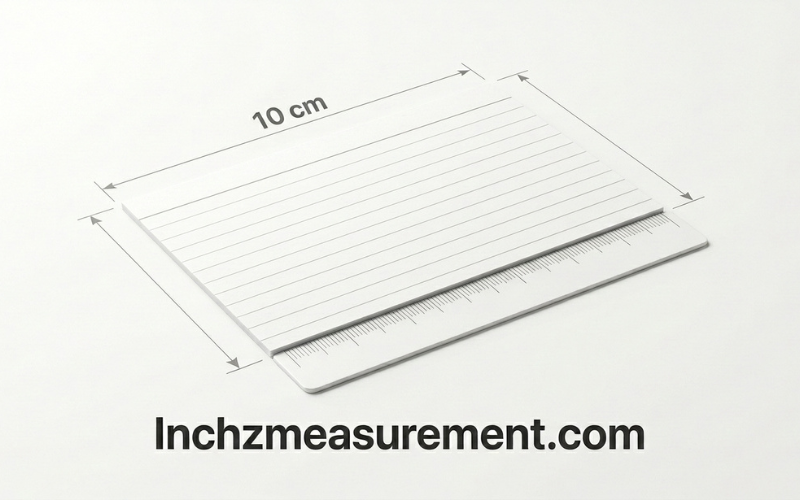
A standard 4 × 6 inch index card measures approximately 101.6 mm across its 4-inch side, which is almost exactly 10 cm. The difference is only 1.6 mm, so this is one of the closest everyday comparisons for the target measurement. If you have a ruled index card nearby, its shorter edge gives you a very convenient way to visualize how big 10 cm is.
2. 4 × 4 Inch Square Sticky Note
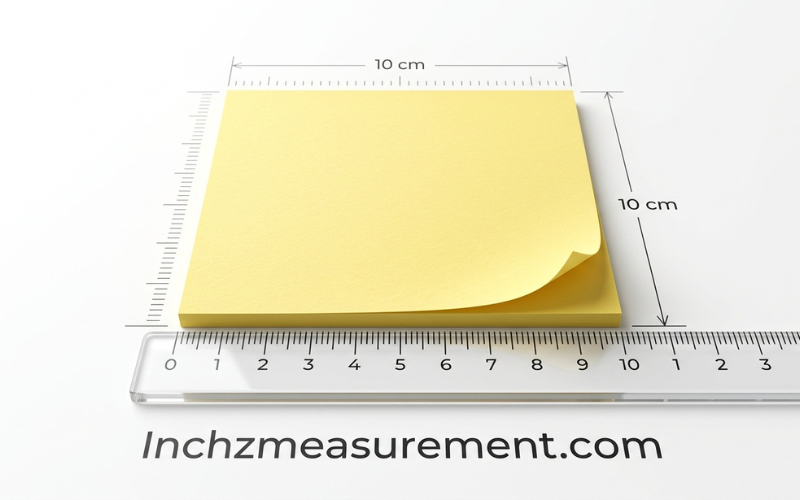
A 4 × 4 inch sticky note has a side length of about 101.6 mm, putting it remarkably close to 10 cm. Its square shape is particularly useful because one complete side represents almost the entire measurement. This is also a helpful comparison when thinking about 10 cm by 10 cm, since four-inch stationery is commonly used for notes, reminders, and craft projects.
3. 4 × 4 Inch Photo Print
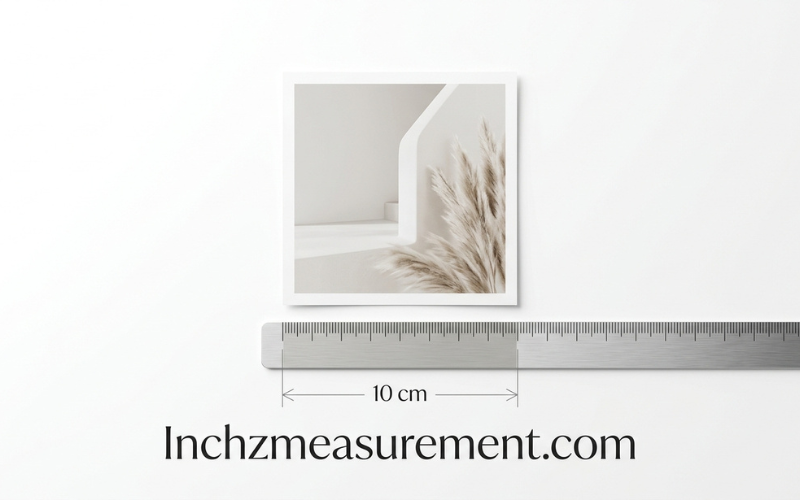
A small 4 × 4 inch square photo measures approximately 101.6 mm on each side. That puts each edge just 1.6 mm longer than 10 cm. Looking at one edge of this type of photograph provides a simple way to knowing the scale without needing to convert between measurement systems.
4. Small Drink Coaster
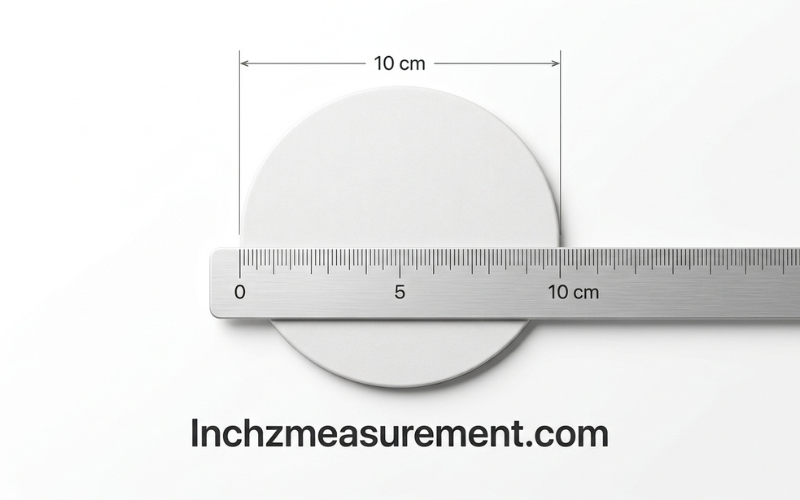
Compact drink coasters are commonly manufactured in diameters or widths around 90–100 mm, although designs vary considerably. A coaster measuring exactly 100 mm would be 10 cm across, while a 95mm version would be only 5mm smaller. Its flat, circular or square shape makes a small coaster particularly useful for visualizing 10 cm in real life.
5. Small Embroidery Hoop
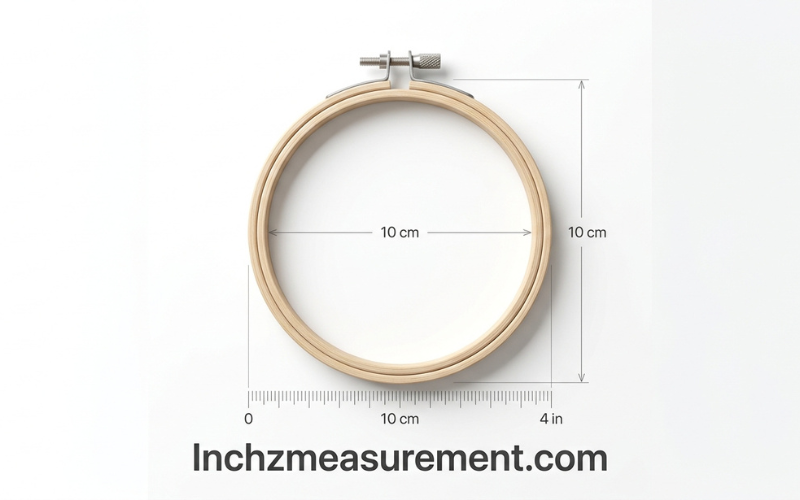
Some compact embroidery hoops are sold with diameters around 100 mm (10 cm). The circular frame provides a clear representation of the distance across the hoop. This comparison is especially useful for people who work with sewing, embroidery, fabric crafts, or miniature decorative projects.
6. 100 mm Measuring Ruler
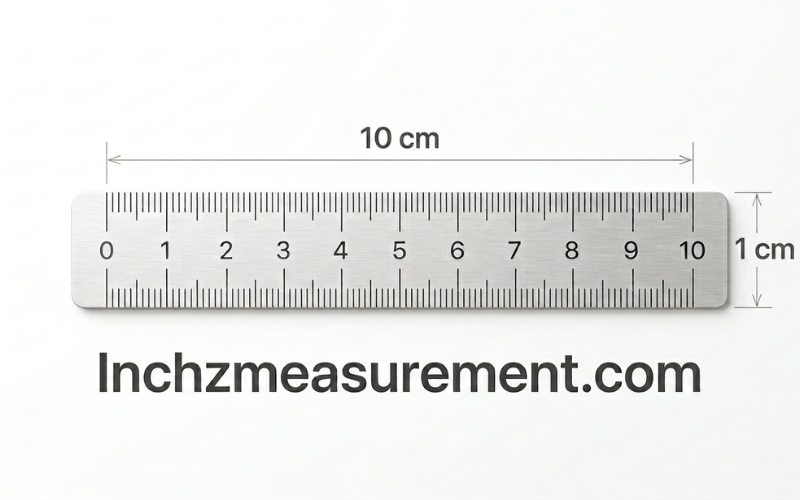
A 100mm ruler is exactly 10 cm long, so there is no approximation involved. This is one of the most precise physical comparisons available because the object is specifically manufactured around the measurement itself. A metric ruler also lets you see all ten centimeters divided into individual millimeter increments.
7. Small Petri Dish
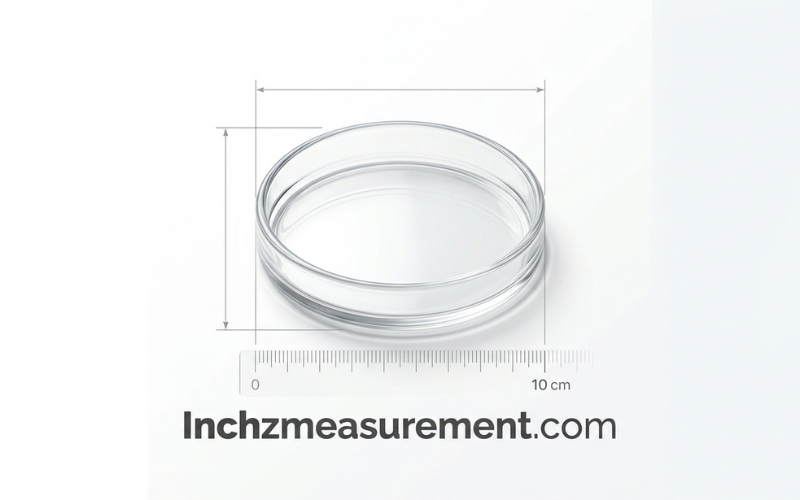
Laboratory suppliers commonly offer Petri dishes with diameters around 90–100 mm, including models with a 100mm diameter. A 100mm dish therefore measures exactly 10cm from one edge to the other through its center. This provides a manufactured example of the measurement used in scientific and laboratory settings.
8. Compact Round Mirror
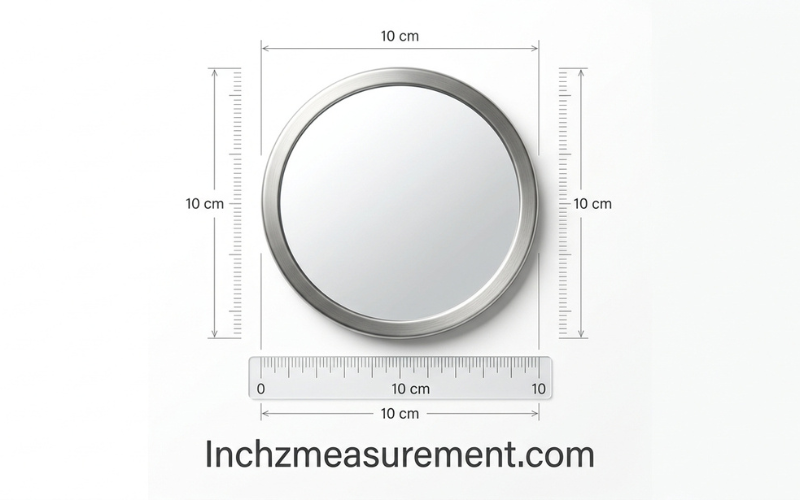
Some compact cosmetic and travel mirrors have outside diameters close to 9–10 cm. A mirror measuring 100mm across would have a diameter exactly equal to 10cm. Because the object is circular and easy to hold, its width across the middle offers a useful mental picture of the measurement.
9. Standard Business Card — Long Edge
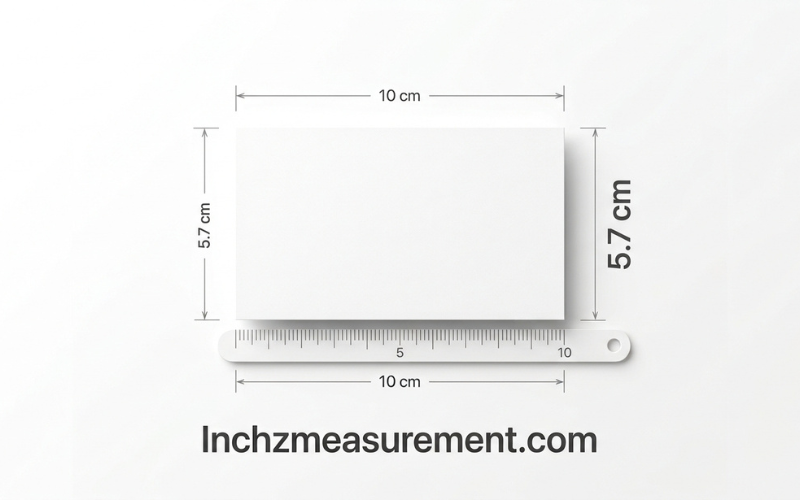
A typical business card is approximately 89mm long, depending on the regional standard and design. Its long edge is therefore about 11mm shorter than 10cm, making it a slightly smaller comparison rather than an exact match. Placing several cards side by side also demonstrates how a relatively small difference can add up to the target measurement.
10. Credit Card — Short Edge
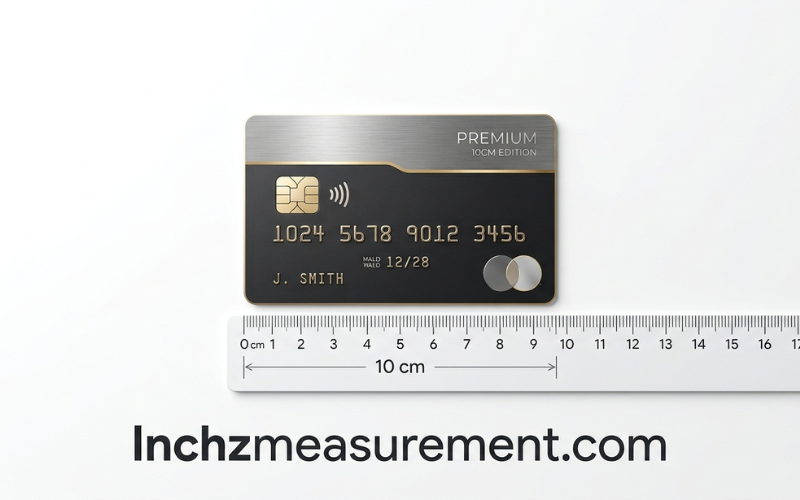
A standard payment card following the ISO/IEC 7810 ID-1 format measures approximately 85.60mm wide. That makes its short edge about 14.4mm less than 10cm. Although it is not an exact match, its standardized dimensions make a credit card a familiar reference for estimating a measurement close to this size.
11. Standard Playing Card — Long Edge
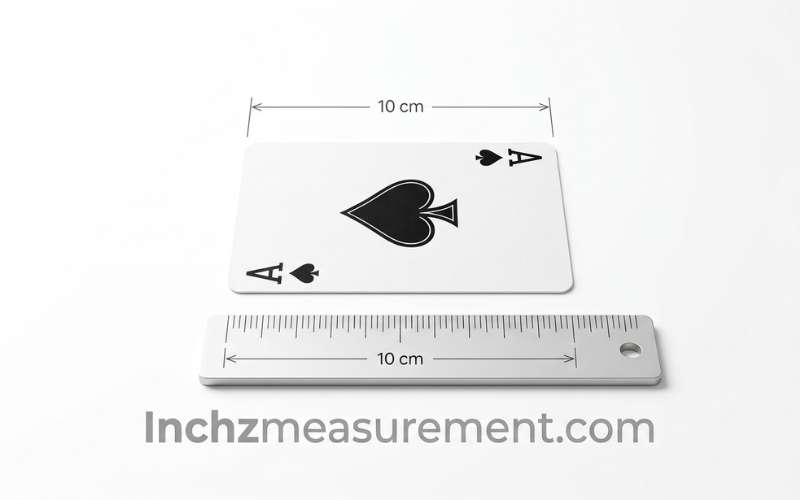
A commonly used playing card measures about 88.9mm along its long edge in the standard poker-card format. That is approximately 11.1mm shorter than 10cm. Since playing cards are familiar and consistently sized, their long edge gives you a useful slightly-under-10cm comparison.
12. Small Picture Frame
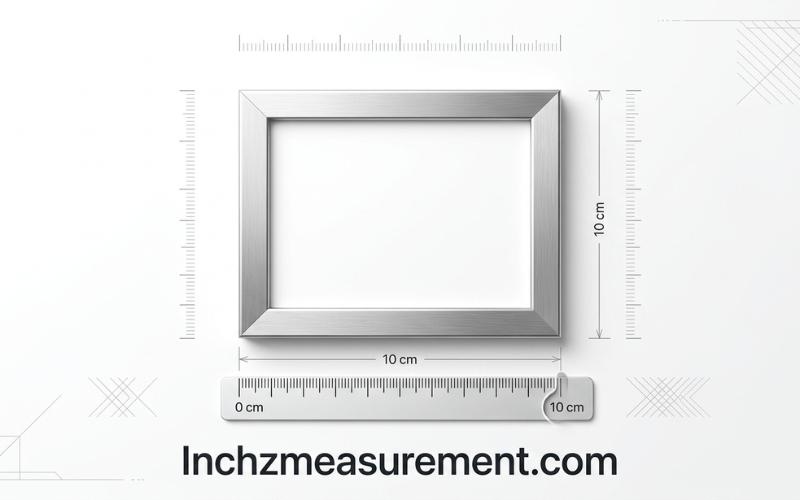
Small tabletop picture frames are available with outside dimensions close to 10cm on one side, although the exact size depends on the frame design and the opening it holds. A compact frame measuring 100mm along one edge matches the target precisely. When using a frame for comparison, check the outside measurement rather than assuming the advertised photo size represents the entire frame.
13. Small Ceramic Saucer
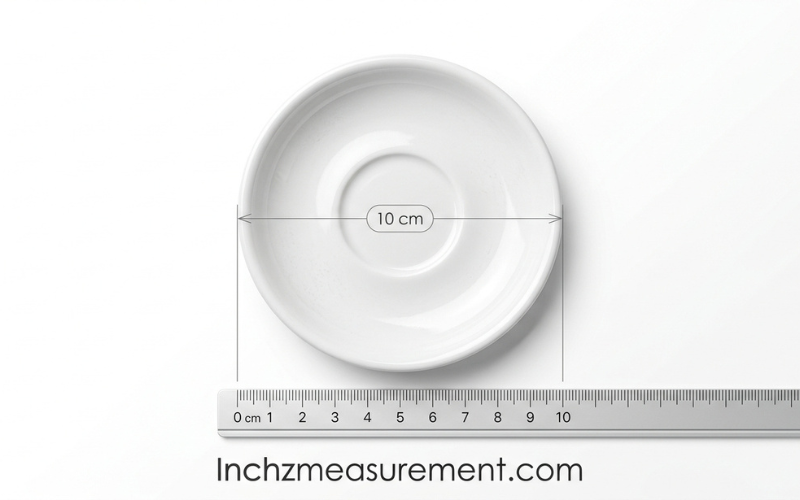
Some miniature ceramic saucers and condiment dishes measure approximately 90–110mm across, putting many examples near the 10cm mark. A saucer with a 100mm diameter would match the measurement exactly. Because these dishes are wider than they are tall, looking directly across their top surface gives the clearest visual comparison.
14. Small Craft Cutting Mat Section
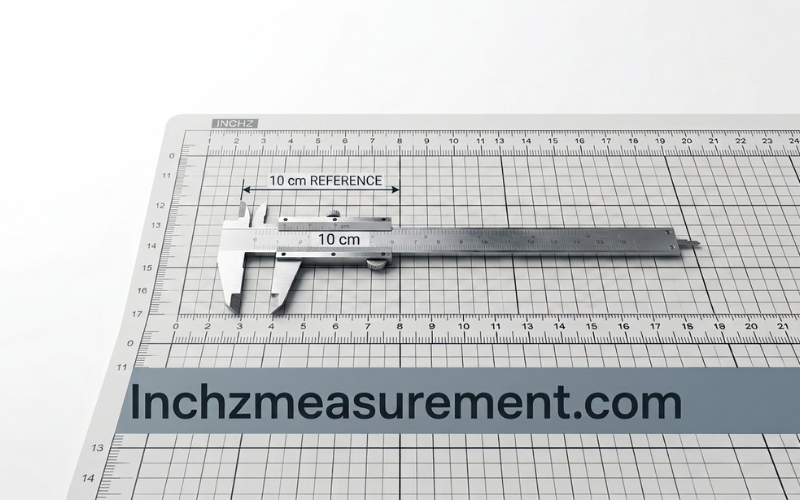
Small craft mats are manufactured in numerous sizes, and some compact versions include a 10cm grid or marked section. A single 10cm square on a metric cutting mat provides an exact visual representation of the measurement. Unlike an unmarked household object, the grid also lets you see how 10cm relates to smaller 1cm and 5mm intervals.
How Big Is 10 cm Visually?
When you picture 10 cm visually, think of a distance roughly equivalent to the short side of a 4 × 6 inch index card. A 4-inch square sticky note is another particularly close comparison because its side measures about 10.16 cm.
The important point is that 10cm does not represent the size of one particular object. It can describe a length, width, height, or diameter, so the shape of the comparison matters. A 10cm line and a 10cm circle have the same relevant dimension even though they look completely different.
Quick Comparison: How Close Are These Objects to 10 cm?
| Object | Approximate Dimension | Closeness to 10 cm |
| 100mm ruler | 100 mm | Exact |
| 4 × 6 inch index card, short side | 101.6 mm | Very Close |
| 4 × 4 inch sticky note | 101.6 mm | Very Close |
| 4 × 4 inch photo | 101.6 mm | Very Close |
| 100mm Petri dish | 100 mm | Exact |
| 100mm embroidery hoop | 100 mm | Exact |
| Small drink coaster | 90–100 mm | Very Close |
| Compact round mirror | 90–100 mm | Very Close |
| Business card, long edge | 89 mm | Slightly Smaller |
| Playing card, long edge | 88.9 mm | Slightly Smaller |
| Credit card, short edge | 85.6 mm | Slightly Smaller |
How Big Is 10 cm in mm?
10 cm equals 100 mm. The metric system makes this conversion simple because every centimeter contains exactly 10 millimeters.
So:
1 cm = 10 mm
10 cm = 100 mm
This is particularly useful when reading product specifications because manufacturers may list small dimensions in millimeters instead of centimeters.
How Big Is 10 cm by 10 cm?
A 10cm × 10cm square has a length of 10cm and a width of 10cm. Its area is therefore 100 square centimeters (100 cm²).
Visually, it is slightly larger than a 4 × 4 inch square because a 4-inch side equals 10.16cm. This distinction matters when working with paper, printing, packaging, crafts, or design measurements where a few millimeters can affect the final fit.
Why Does 10 cm Matter?
In professional settings, 10 centimeters appears in product design, manufacturing, engineering, construction, laboratory equipment, packaging, and technical drawings. Designers may work in millimeters for greater precision, so knowing that 10cm = 100mm makes specifications easier to interpret.
At home, the same measurement can help when choosing craft supplies, checking furniture dimensions, comparing products online, or estimating the size of small household items. A 10cm reference is particularly useful when an online listing gives dimensions but the object itself cannot be handled before purchase.
If you find this helpful and want more free guides like this then here we have more for you:
FAQs
Is 10 cm the same as 4 inches?
No. 10cm equals 3.937 inches, while 4 inches equals 10.16cm. The difference is 1.6mm.
How many millimeters are in 10 cm?
There are exactly 100 millimeters in 10 centimeters because one centimeter contains 10 millimeters.
How big is 10 cm in inches?
10cm is 3.937 inches, which is slightly shorter than 4 inches.
How can I measure 10 cm without a ruler?
Use a known object with a standardized dimension, such as the 4-inch side of a square item, which is 10.16cm and therefore very close to 10cm. For exact work, however, a metric ruler or measuring tape is preferable.
Is a 4-inch object the same as 10 cm?
Not exactly. 4 inches equals 10.16cm, so it is 1.6mm longer than 10cm.
Is 100 mm the same as 10 cm?
Yes. 100mm and 10cm represent exactly the same length.
Is 10 cm a large measurement?
For everyday objects, 10cm is relatively small. It is about 3.94 inches, so it is noticeably shorter than the length of a standard sheet of paper but large enough to describe many small household objects.
What is the easiest object to use for a 10cm comparison?
A 100mm ruler is the most accurate choice because its length is exactly 10cm. For an everyday item, a 4-inch square sticky note or 4 × 6 inch index card’s short side is very close.
Conclusion
How Big Is 10 cm? It is exactly 100mm, 0.1 meter, and approximately 3.937 inches. A 100mm ruler gives an exact physical representation, while the 101.6mm side of a 4-inch square item provides an extremely close everyday comparison.
How big is 10 cm visually becomes much easier to knowing when you compare the measurement with familiar objects rather than relying on the number alone. Whether you’re checking a product specification, working on a craft project, or simply trying to estimate a dimension, these comparisons give you several practical ways to recognize the size of 10cm.