
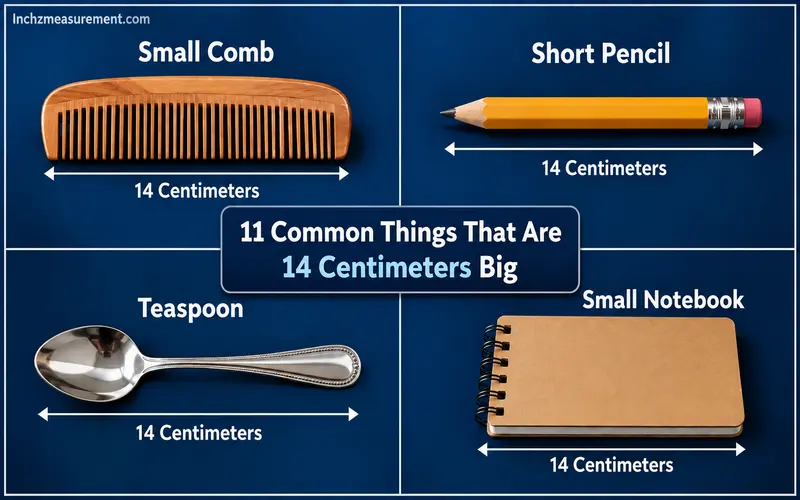
14 centimetres is a short everyday length that is equal to 5.51 inches or 140 millimetres. It is long enough to cover a little more than the width of an adult hand, yet small enough to fit comfortably in a pocket or small drawer. If you do not have a ruler nearby, familiar objects such as a short pencil, small comb, kitchen utensil or compact remote can help you picture the size.
A measurement of 14 centimetres also appears in stationery, kitchen tools, personal-care items and small household objects. Since many manufactured items vary slightly in size, the examples below should be treated as practical visual comparisons rather than exact measuring standards.
[mzmeasure value=”14″ unit=”centimetres” example=”Small Comb”]
How Long Is 14 Centimetres?
14 centimetres is an exact metric measurement equal to 140 millimetres. Converted to the imperial system, it is about 5.51 inches, so it is slightly more than 5½ inches long. In everyday use, 14 centimetres is a manageable size that can be held easily in one hand.
The measurement is useful for picturing small household and personal items. A compact comb, short pencil or small kitchen tool can come close to this length. Some notebooks and stationery products also have one side close to 14 centimetres. The exact size of manufactured objects can vary, so an item described as approximately 14 centimetres should not be treated as a precise measuring instrument.
If you are familiar with a 6-inch ruler, 14 centimetres is slightly shorter than its full length. It is also longer than [5 inches], making the difference easier to visualise when comparing everyday objects.
[mztable value=”14″ unit=”Centimetres”]
How Big Is 14 Centimetres?
Visualising 14 centimetres can be easier when you compare it with something familiar. It is roughly the length of an average adult hand from the wrist to the end of the middle finger, although hand sizes differ considerably from person to person. It is also close to the length of several small personal and household items.
A 15-centimetre ruler is only 1 centimetre longer, so imagining a standard small ruler with the last centimetre removed gives a useful reference. A compact comb may also be around this length. Some small notebooks have a side close to 14 centimetres, while certain kitchen utensils and brushes fall within a similar range.
Another useful comparison is a 5½-inch measurement. Since 14 centimetres equals about 5.51 inches, picturing a little more than 5½ inches can give you a reasonable sense of the distance. These comparisons are helpful for estimating size, but they should not replace an actual ruler when precision matters.
11 Common Things That Are 14 Centimetres Long
The following everyday objects can help make 14 centimetres easier to picture. Most are close to this measurement, although their actual dimensions may vary depending on the design, brand and intended use.
| Everyday Item | Actual Size |
| Small Comb | 14 centimetres |
| Short Pencil | 14 centimetres |
| Compact TV Remote | 14 centimetres |
| Small Kitchen Knife Blade | 14 centimetres |
| Wooden Paintbrush | 14 centimetres |
| Small Hairbrush | 14 centimetres |
| Teaspoon | 14 centimetres |
| Crochet Hook | 14 centimetres |
| Small Notebook | 14 centimetres |
| Butter Knife | 14 centimetres |
| Compact Toothbrush | 14 centimetres |
1. Small Comb
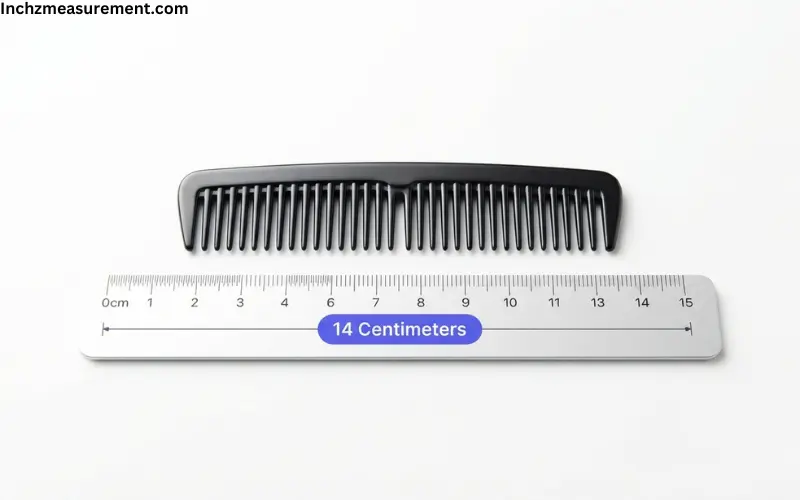
A small comb is a convenient object for visualising 14 centimetres. Many compact pocket or travel combs are around this length, although some are shorter or longer. When closed or measured from end to end, a small comb can give you a useful physical reference for the distance.
If you have a comb that measures close to 14 centimetres, place it beside an object you want to estimate. The difference becomes easier to judge than trying to picture centimetres in your head. A comb is particularly useful because its straight shape gives you a clear beginning and end point.
The teeth may make the comb appear longer visually, but the important measurement is its overall end-to-end length. If your comb is exactly 14 centimetres, it provides a direct reference for the target measurement. If it is only approximately that size, remember that it is an estimate rather than a precise standard.
2. Short Pencil
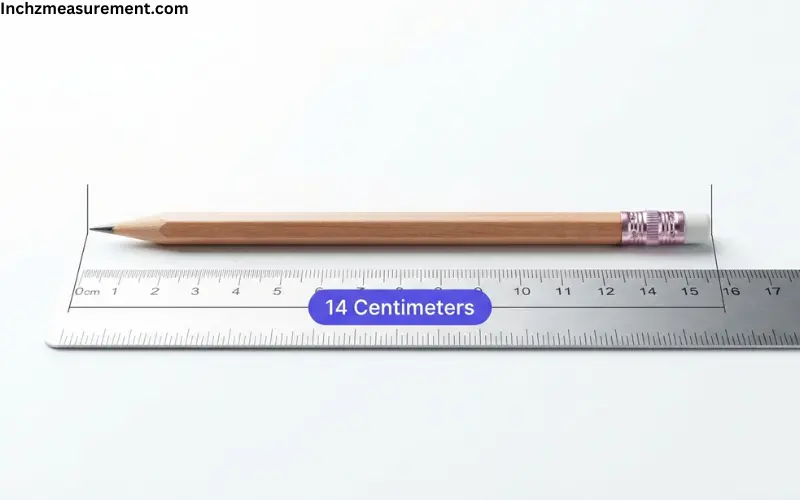
A standard new pencil is usually longer than 14 centimetres, but a shortened pencil can be very close to this measurement. This makes a short pencil a useful comparison when you want to picture 14 centimetres without a ruler.
Pencils become shorter as they are used, so an old pencil may naturally approach the 14-centimetre range. The eraser, metal ferrule and pointed tip can also affect how the total length is measured. For a simple comparison, measure from the flat end to the tip.
If you have a pencil around this length, place it next to the object you are estimating. The straight shape makes it easy to see whether the object is shorter, longer or roughly equal. This is especially useful for stationery, small tools and other objects with fairly straight edges.
3. Compact TV Remote
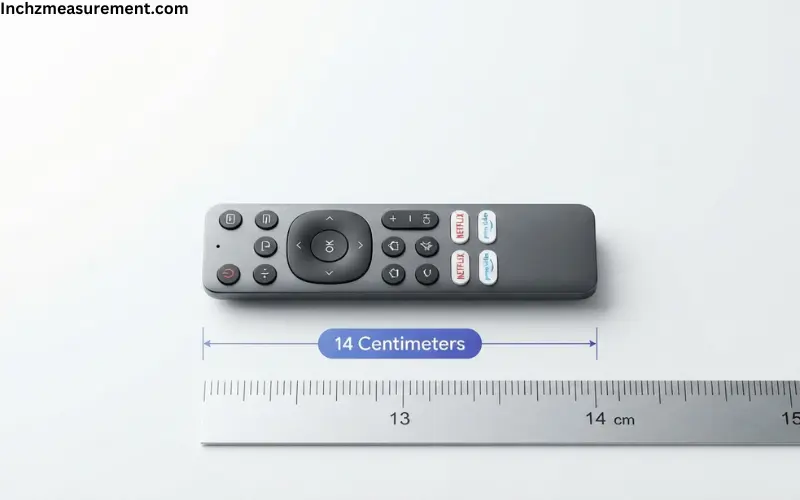
Some compact television and media remotes are around 14 centimetres long. Larger remotes can be considerably longer, while small streaming-device remotes may be much shorter. This means a compact remote is best used as an approximate comparison rather than an exact 14-centimetre standard.
A remote works well visually because it normally has a long, narrow rectangular shape. Place it next to the item you want to compare, lining up one end of each object. If the object reaches about the same point at the other end, it is close to the remote’s length.
For a more accurate estimate, check the remote’s stated dimensions if they are available. If its length is close to 14 centimetres, it can serve as a handy household reference. It is also an object many people can recognise immediately, making the comparison easier to remember.
4. Small Kitchen Knife Blade
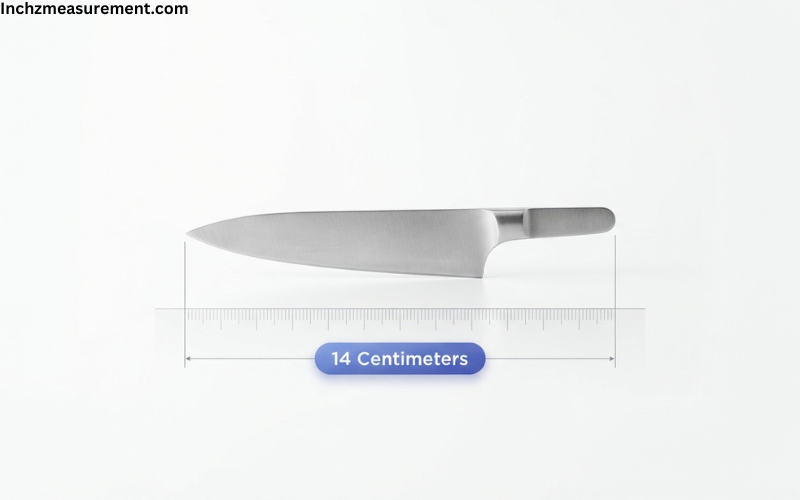
A small kitchen knife blade can be close to 14 centimetres long. This measurement refers to the blade rather than the entire knife, since the handle adds additional length. Kitchen knives come in many sizes, so not every small knife will match 14 centimetres.
The straight cutting edge gives a clear visual reference. You can picture 14 centimetres as the approximate distance from the heel of a small blade to its tip. A ruler should be used if you need to measure the blade accurately.
This comparison is useful because kitchen knives have a familiar size and shape. A 14-centimetre blade is noticeably shorter than many chef’s knives but long enough for everyday food preparation tasks. When using a knife as a visual comparison, handle the object carefully and never use the blade as a substitute for a measuring tool.
5. Wooden Paintbrush
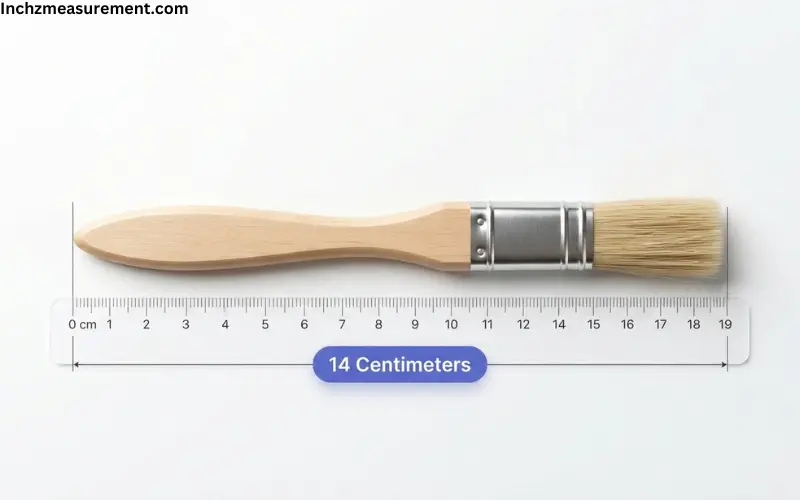
A small wooden paintbrush can measure close to 14 centimetres from the end of its handle to the tip of the bristles. Artists’ brushes and decorating brushes come in many lengths, so this is an approximate real-life comparison.
The narrow, straight design makes a brush easy to compare with a 14-centimetre distance. If you have several brushes, place them together and find one that comes closest to the target. A brush that is slightly longer or shorter can still help you build a visual estimate.
The handle is usually the easiest part to judge because it forms a relatively straight line. The bristles can spread out, so the measurement should normally be taken along the brush’s central length rather than across the bristle width. This makes a 14-centimetre brush a practical reference for small craft and painting projects.
6. Small Hairbrush
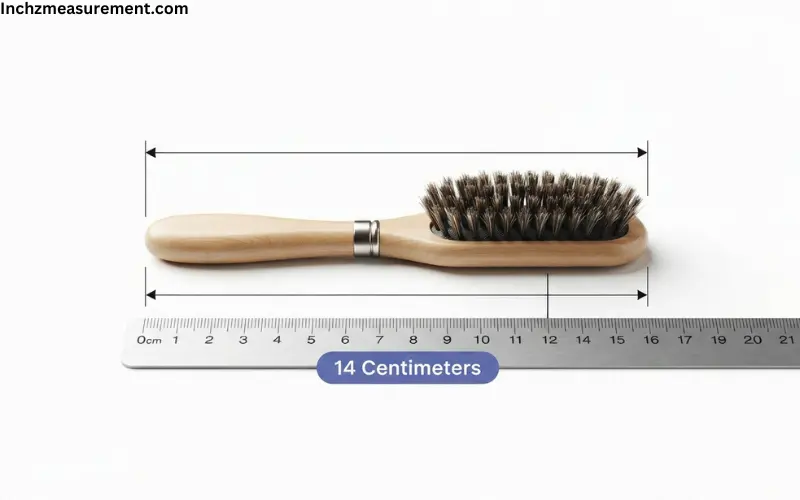
Some compact hairbrushes are approximately 14 centimetres long. These smaller designs are made for travel, handbags or quick grooming and are generally shorter than full-sized brushes.
A hairbrush can be a useful comparison because it has a clear overall length that is easy to see. Hold it beside another object and compare the two end points. If the object reaches roughly from one end of the brush to the other, it is likely to be somewhere near 14 centimetres.
The exact measurement depends on the brush design. Handles, curved bodies and bristle shapes can all change the overall dimensions. For that reason, a small hairbrush should be treated as an approximate visual reference. Still, it gives a practical sense of what 14 centimetres looks like in the hand.
7. Teaspoon
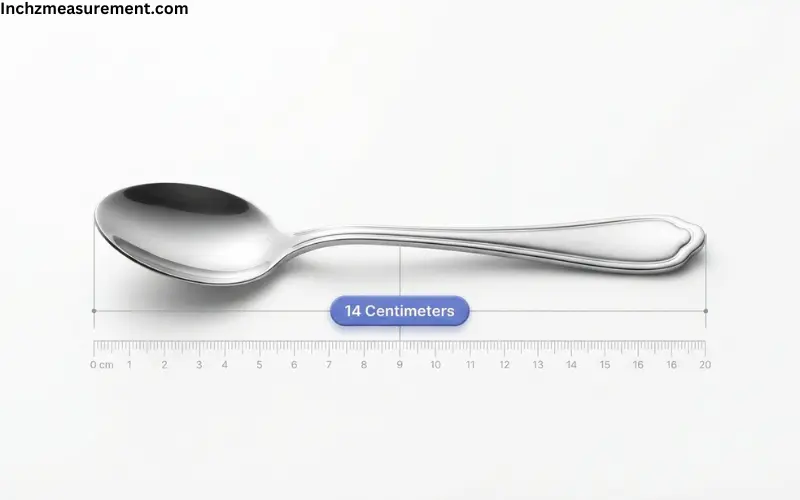
A teaspoon can be surprisingly close to 14 centimetres in total length, depending on its design. Some teaspoons are shorter, while others have longer handles. The measurement normally includes the bowl and the handle from one end to the other.
This makes a teaspoon a useful kitchen comparison for a measurement around 14 centimetres. If you have one nearby, place it on a flat surface and imagine the distance from the very end of the handle to the front edge of the spoon bowl.
Because spoon sizes vary, it is important not to assume every teaspoon is exactly 14 centimetres. The comparison works best when you are trying to estimate rather than obtain a precise measurement. A teaspoon can help you recognise that 14 centimetres is roughly the length of a small piece of kitchen equipment that fits easily in one hand.
8. Crochet Hook
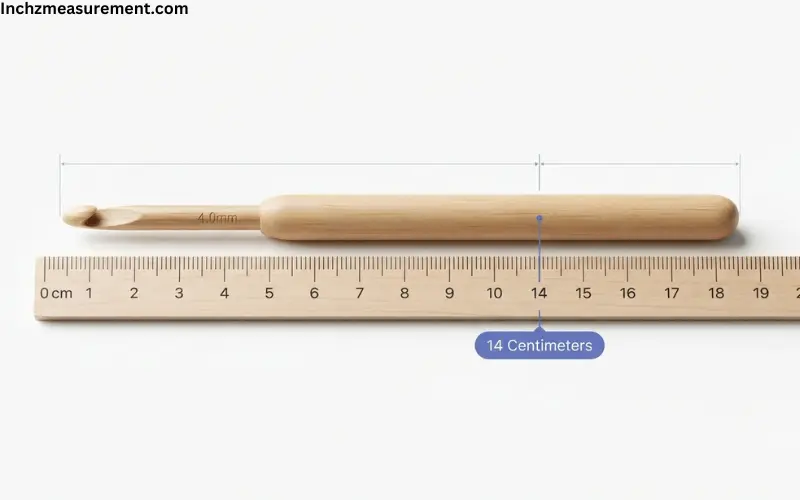
A crochet hook is another small tool that can come close to 14 centimetres in length. Many crochet hooks have long, narrow handles with a hooked working end. Their length varies according to the manufacturer and style.
The straight shape makes a crochet hook particularly easy to compare with a measured distance. Lay it flat and look at the full length from one end to the other. If the hook is around 14 centimetres, it can provide a quick reference when estimating the size of small craft materials.
Crochet hooks are also useful because their slim profile makes the length easier to focus on without being distracted by a wide shape. A hook that is 14 centimetres long is just over 5½ inches, so you can also picture it as a little longer than a 5-inch object.
9. Small Notebook
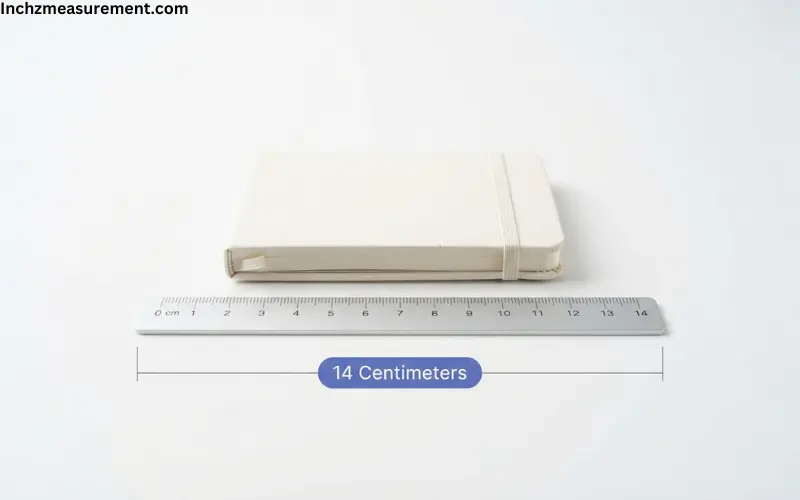
Some compact notebooks have a side measuring around 14 centimetres. Notebook dimensions vary widely, so the exact size depends on the format and manufacturer. The measurement may refer to the height, width or another side of the notebook.
A notebook provides a different kind of comparison because its flat surface makes the distance easy to see. If one side is close to 14 centimetres, place a ruler along that edge to confirm the measurement. Once you have seen it, the notebook can become a useful mental reference.
This comparison is particularly helpful when estimating the dimensions of stationery, cards, small packages and other flat objects. A 14-centimetre side is not especially large, but it is substantial enough to be noticed clearly when placed beside smaller stationery items.
10. Butter Knife
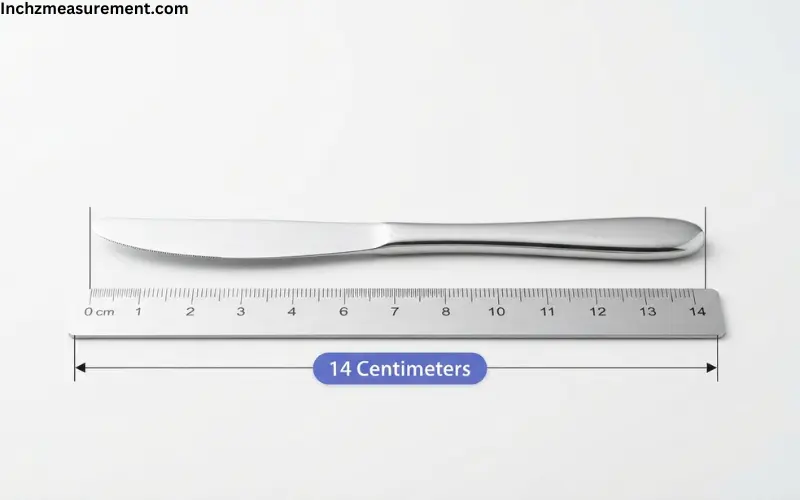
A small butter knife can be around 14 centimetres long, although many designs are longer. The total length includes both the blade and handle, so the shape of the knife makes a noticeable difference.
For visualising 14 centimetres, a compact butter knife can be placed on a table beside the object you want to estimate. Align the handles or ends and compare their overall lengths. This gives you a quick visual judgement without needing to count centimetres.
Do not assume that a butter knife is exactly 14 centimetres. Some are designed for smaller place settings, while others have longer handles. If you need accuracy for a project, use a ruler instead. As a familiar household object, however, a smaller butter knife can give you a useful idea of what a little over 5½ inches looks like.
11. Compact Toothbrush
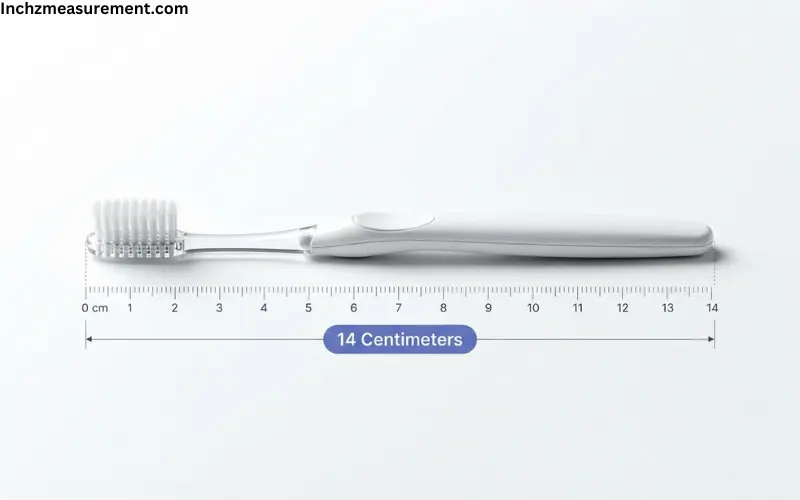
Some compact or children’s toothbrushes can measure close to 14 centimetres from the end of the handle to the end of the brush head. Adult toothbrushes are often longer, so this comparison works best with smaller designs.
The toothbrush’s narrow and mostly straight shape makes its length easy to compare visually. Lay it beside another item and line up the ends. If both objects finish at roughly the same point, they are likely to be close in length.
Toothbrushes are especially useful as a household reference because their dimensions are easy to see and remember. The exact size varies by age range, design and brand, so a toothbrush should only be used for an approximate estimate unless its dimensions are known. It can still provide a simple mental picture of a 14-centimetre distance.
Measurement Without a Ruler
You can estimate 14 centimetres without a ruler by using familiar references, but these methods will only give approximate results.
A hand measurement can help. For many adults, the distance from the wrist to the end of the middle finger is somewhere around the 14-centimetre range, but hand sizes vary. Measure your hand once with a ruler and remember the result. You can then use it as a personal reference.
You can also use a 15-centimetre ruler if one is available and mentally subtract 1 centimetre. This is one of the simplest ways to picture the target because 14 centimetres is only slightly shorter than the ruler.
A third method is to use a known household object that is close to 14 centimetres, such as a compact comb or small brush. Compare the object end to end with the item you are estimating. For accurate work, however, a proper ruler or measuring tape remains the better choice.
Related Post: 10 Everyday Objects That Are About 13 Centimeters Big
FAQs
How many inches is 14 centimetres?
14 centimetres is approximately 5.51 inches. In practical terms, you can think of it as a little more than 5½ inches. The exact conversion is based on 1 inch equalling 2.54 centimetres.
How many millimetres are in 14 centimetres?
There are 140 millimetres in 14 centimetres. Since 1 centimetre contains 10 millimetres, you simply multiply 14 by 10. This makes 140 mm the exact metric equivalent.
Is 14 centimetres the same as 5 inches?
No. Five inches is equal to about 12.7 centimetres. Therefore, 14 centimetres is about 1.3 centimetres longer than 5 inches. It is closer to 5½ inches than to 5 inches.
Is 14 centimetres a big measurement?
14 centimetres is relatively small for most household objects, but it is large enough to be clearly visible. It is roughly 5.51 inches long and can be compared with compact stationery, grooming items, kitchen utensils and small tools.
Can I measure 14 centimetres with my hand?
You can make a rough estimate using your hand, but it will not be exact. Adult hands differ in size, so your wrist-to-fingertip distance may be shorter or longer than 14 centimetres. Measure your hand once to create a more reliable personal reference.
What does 14 centimetres look like?
14 centimetres looks like a little more than 5½ inches. A compact comb, short pencil, small brush or similar household item can help you picture the length. The exact size of these objects varies, so they are visual comparisons rather than precise standards.
Is 14 centimetres longer than 6 inches?
No. Six inches equals approximately 15.24 centimetres, making 6 inches about 1.24 centimetres longer than 14 centimetres. So 14 centimetres falls between 5 inches and 6 inches and is much closer to 6 inches.
What common objects are around 14 centimetres long?
Several small household and personal items can be around this length, including compact combs, shortened pencils, small brushes, crochet hooks, some teaspoons and compact toothbrushes. Their dimensions vary, so check the manufacturer’s measurements if you need an exact 14-centimetre length.
Conclusion
14 centimetres is equal to 140 millimetres or about 5.51 inches, making it a little longer than 5½ inches. A compact comb, short pencil, small brush or crochet hook can help you build a mental picture of the distance. A 15-centimetre ruler is another useful reference because 14 centimetres is only 1 centimetre shorter. Hand measurements can also work for rough estimates, provided you remember that everyone’s hands are different.
For everyday comparisons, thinking of 14 centimetres as a little over 5½ inches is probably the easiest approach. When accuracy matters, use a ruler or tape measure rather than relying on an object that is only approximately the same size.