
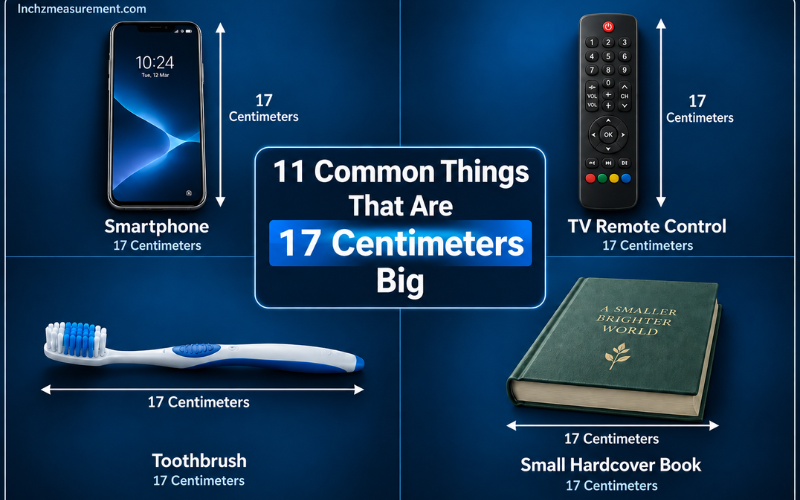
17 centimetres is equal to 6.69 inches or 170 millimetres. It is a fairly short length, roughly the distance from the tip of an adult finger to part of the palm, although hand sizes vary. If you do not have a ruler nearby, everyday objects can make 17 centimetres much easier to picture. A typical smartphone, TV remote, toothbrush, or small book can be close to this length.
The exact size of these objects varies by model, so they should be treated as visual references rather than precise measuring tools. Seeing 17 centimetres alongside familiar objects is useful when checking the size of a product, estimating a space, or simply trying to picture how long the measurement really is.
[mzmeasure value=”17″ unit=”centimeters” example=”Smartphone”]
How Long Is 17 Centimeters?
17 centimetres is a fixed metric measurement equal to 170 millimetres. In the imperial system, it works out to about 6.69 inches, so you can think of it as just under 6¾ inches. It is also about 0.56 feet.
For everyday use, 17 centimetres is long enough to cover much of the height of a modern smartphone. It is also close to the length of some TV remotes, books, combs, and toothbrushes. These comparisons are useful because most people have handled objects of this size before.
The measurement appears in many small household products and personal items. However, an object described as being around 17 centimetres should not automatically be assumed to be exactly 17 centimetres. Manufacturers often use different dimensions, so the comparison depends on the particular item.
[mztable value=”17″ unit=”Centimeters”]
How Big Is 17 Centimeters?
Picture a ruler that starts at zero and ends at 17 centimetres. That gives you a little over half the length of a standard 30-centimetre ruler. It is also around two-thirds the length of a typical sheet of A4 paper along its shorter side, although A4 paper is actually 21 centimetres wide.
Your hand can also provide a rough visual reference. For many adults, the distance from the tip of the middle finger towards the wrist can be somewhere around this range, but hand sizes differ considerably. Holding a smartphone beside a ruler can give you another useful comparison because many phones are close to 17 centimetres tall.
If you have a pencil, remote control, toothbrush, or small book nearby, compare its longest side with 17 centimetres. The closer the object is to that length, the easier it becomes to picture the measurement.
11 Common Things That Are 17 Centimeters Long
The objects below are familiar items that can help you visualise 17 centimetres. Some are manufactured close to this measurement, while others can vary by brand or model.
| Everyday Item | Actual Size |
| Smartphone | 17 centimetres |
| TV Remote Control | 17 centimetres |
| Small Hardcover Book | 17 centimetres |
| Toothbrush | 17 centimetres |
| Hair Comb | 17 centimetres |
| Kitchen Knife Blade | 17 centimetres |
| Makeup Brush | 17 centimetres |
| Sunglasses Case | 17 centimetres |
| Large Pencil Case | 17 centimetres |
| Dinner Fork | 17 centimetres |
| Small Notebook | 17 centimetres |
1. Smartphone
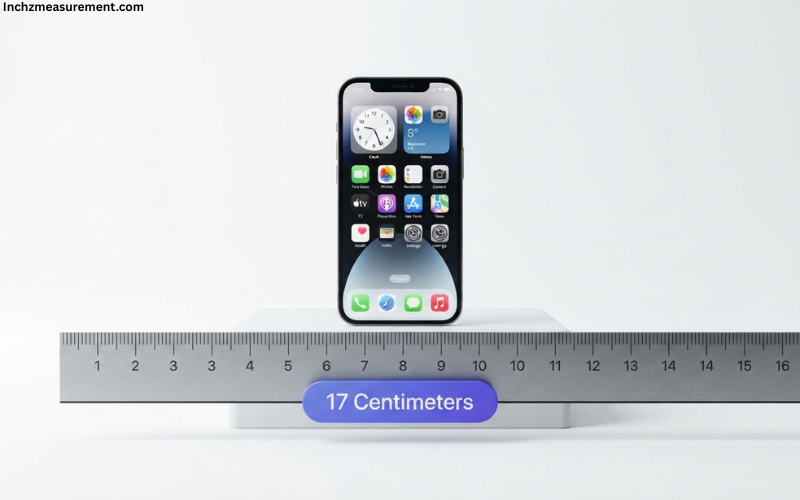
A smartphone is one of the easiest objects to use when picturing 17 centimetres. Many modern phones have a height somewhere around 15 to 17 centimetres, with some larger models reaching or exceeding this measurement. A phone that measures about 17 centimetres from top to bottom gives you a convenient visual reference for the target length.
Place the phone upright beside a ruler and look at the 17-centimetre mark. If the phone reaches close to that point, you have a good idea of how long 17 centimetres is.
The comparison is only approximate because smartphones come in many sizes. Screen size also does not directly tell you the phone’s height. A phone advertised with a particular screen measurement refers to the diagonal of the display, not the full length of the handset.
2. TV Remote Control
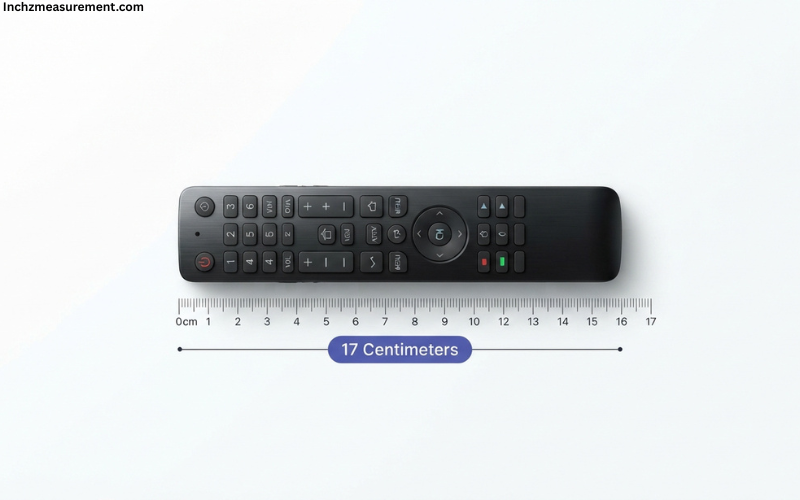
A typical TV remote control can be surprisingly close to 17 centimetres long. Many compact and standard remotes measure somewhere in the mid-teens, making them useful for visualising a length of 17 centimetres.
Take a remote and measure from its top edge to its bottom edge. If it reaches roughly 17 centimetres, it provides a handy household comparison. You will probably notice that this length is not especially large. It fits comfortably in one hand and can be placed on a small table without taking up much space.
Remote controls vary considerably, though. A simple television remote may be shorter, while a larger universal remote can be longer. For that reason, use a remote as an estimation tool rather than treating every remote as exactly 17 centimetres.
3. Small Hardcover Book
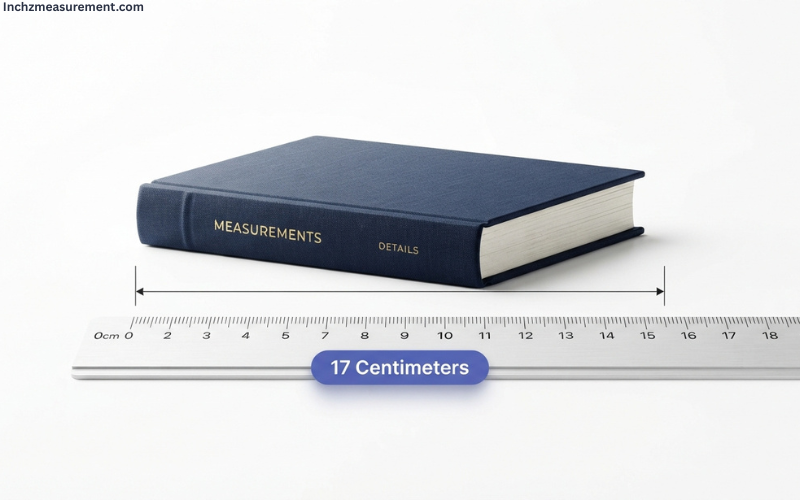
Some small hardcover books have a height close to 17 centimetres. Their dimensions depend on the publisher, subject and book format, but compact books can provide a useful reference when trying to picture this length.
Imagine the longer vertical edge of a small book measuring about 17 centimetres. That is roughly the distance you are looking for. A book also gives you a clear, straight edge, which makes comparison easier than using an object with a curved or irregular shape.
If you have several books at home, place them upright and compare their height. One may be noticeably shorter or taller than 17 centimetres. This makes books useful for developing a visual sense of the measurement, even when their dimensions are not identical.
4. Toothbrush
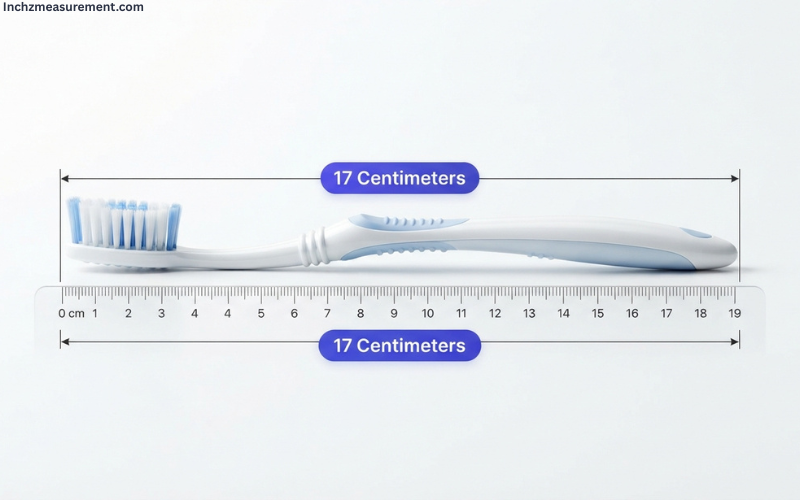
A toothbrush can be around 17 centimetres long, particularly compact adult or travel designs. Some standard toothbrushes are longer, so the exact model matters.
The useful part of this comparison is that toothbrushes are familiar objects with a mostly straight shape. Hold one horizontally and picture a 17-centimetre line running from the end of the handle to the tip of the brush head. If your toothbrush is close to that size, it gives you a practical reference.
A toothbrush is also a good object for estimating length because its handle is narrow and easy to align with a ruler or another straight object. Keep in mind that children’s toothbrushes are usually shorter, while some adult toothbrushes with longer handles may extend beyond 17 centimetres.
5. Hair Comb
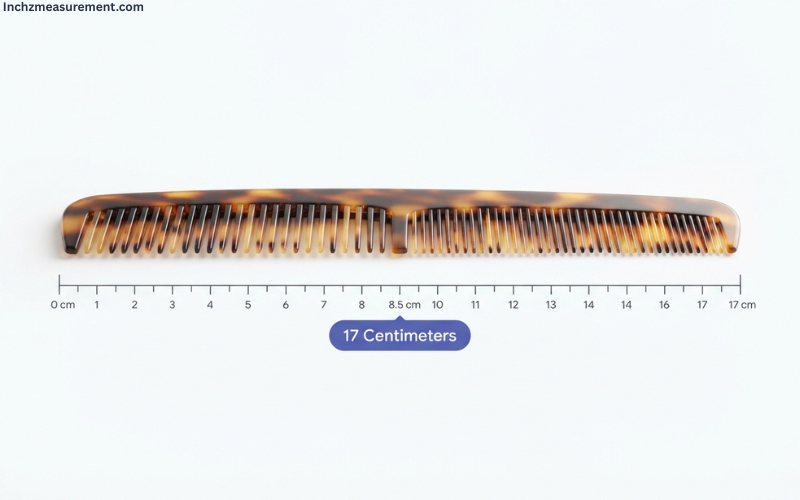
A medium or large hair comb can measure close to 17 centimetres from end to end. Combs come in many shapes, but traditional straight combs often have a long, narrow body that makes their length easy to compare.
Place the comb next to a 30-centimetre ruler and look at where its end falls. A comb reaching approximately the 17-centimetre mark gives you a simple picture of the measurement.
This comparison is particularly useful because the comb is narrow but has a clear overall length. It also shows that 17 centimetres is considerably longer than a small hand-held object such as a credit card, while still being short enough to fit easily inside a handbag, drawer or toiletry bag.
6. Kitchen Knife Blade
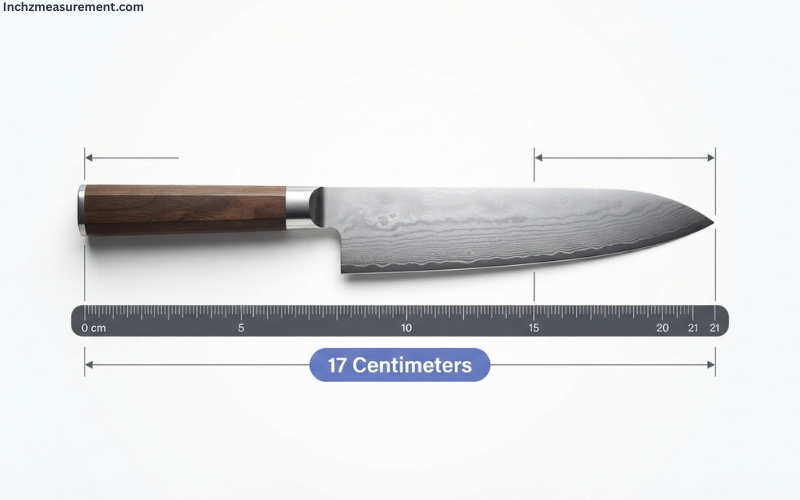
A small kitchen knife blade can be around 17 centimetres long. This refers specifically to the blade rather than the entire knife, as the handle adds extra length.
A blade measuring 17 centimetres would extend nearly 6¾ inches from the heel to the tip. That makes it a useful comparison if you have a kitchen knife with a similar blade size.
Knife dimensions vary according to their purpose. A small utility or kitchen knife may have a blade close to this length, while a chef’s knife is often considerably longer. If you use this comparison, measure only the blade and not the handle. This distinction matters because measuring the whole knife could give you a much larger figure than 17 centimetres.
7. Makeup Brush
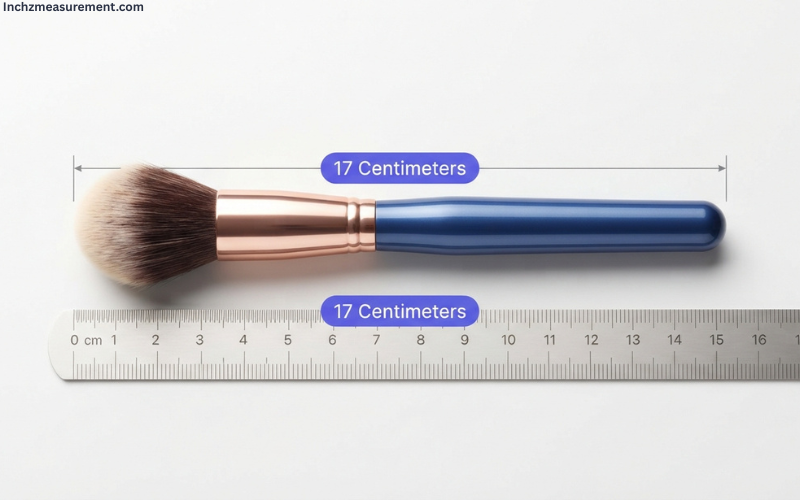
Some makeup brushes measure around 17 centimetres from the bottom of the handle to the end of the bristles. Longer professional brushes can exceed this measurement, while compact travel brushes can be shorter.
A makeup brush gives you a useful visual reference because it is thin and nearly straight. Place it beside a ruler and compare its full length with the 17-centimetre mark. If it reaches close to the mark, you have a good approximation.
The brush also helps show how 17 centimetres feels in your hand. It is longer than many small cosmetics but short enough to store easily in a makeup bag or drawer. When estimating the size of a brush, remember that the handle and brush head together make up the total length.
8. Sunglasses Case
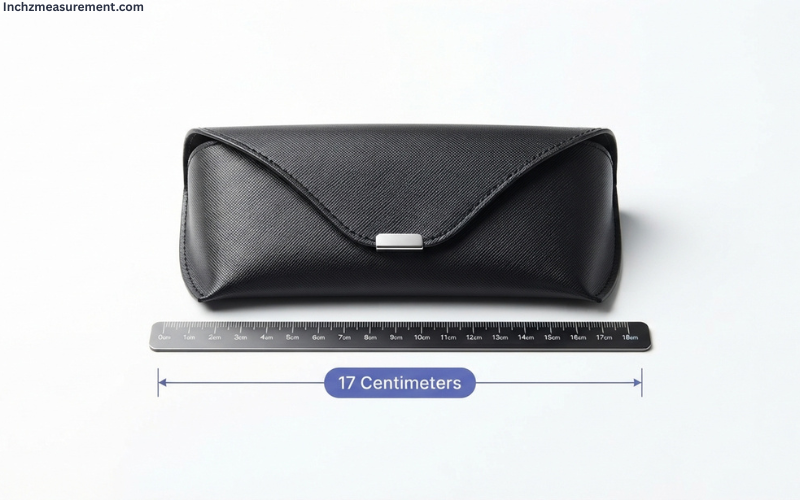
A hard sunglasses case can sometimes measure around 17 centimetres long. The exact size depends on the case and the type of glasses it is designed to hold.
This is a useful comparison because most cases have a clear, elongated shape. If your case measures close to 17 centimetres, you can use its length as a quick mental reference. Place the case against a ruler or a sheet of paper with a known dimension to check how close it is.
Cases designed for larger frames may be longer, while compact cases for smaller sunglasses can be shorter. Even so, the typical elongated shape makes a sunglasses case a convenient way to picture a measurement of roughly 17 centimetres.
9. Large Pencil Case
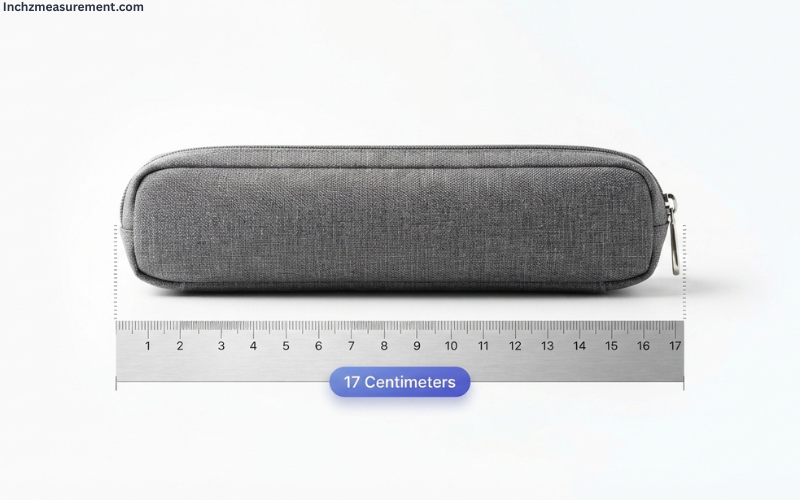
A larger pencil case can have a length close to 17 centimetres. Many school and stationery cases are designed to hold pencils and pens, so they tend to be long and narrow rather than square.
A case around 17 centimetres long gives you a useful everyday comparison. It is roughly the same length as a large smartphone turned vertically, depending on the model. The straight zippered edge also makes it easy to compare with a ruler.
Pencil cases are not standardised, so sizes can range from compact cases to much larger designs. If yours is close to 17 centimetres, measure along its longest straight side. That will give you a more reliable comparison than estimating from its width or overall appearance.
10. Dinner Fork
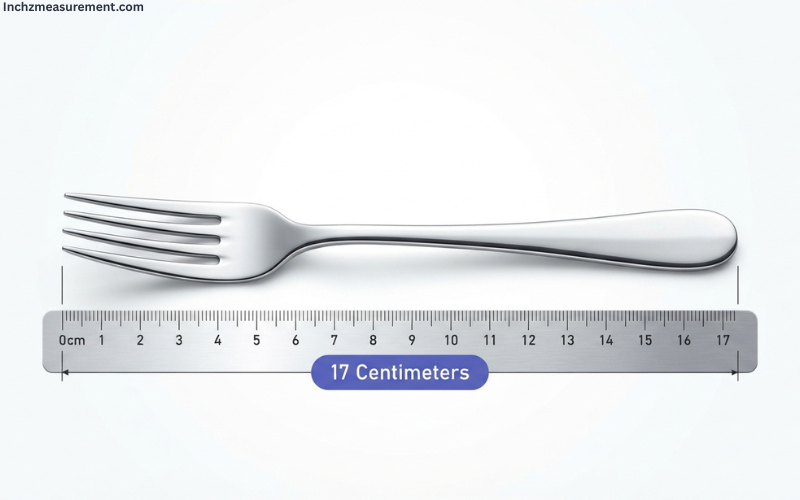
A dinner fork can be close to 17 centimetres long, although many full-sized forks are somewhat longer. The exact size depends on the design and whether it is intended for everyday dining or a particular style of table setting.
For a visual comparison, measure from the end of the handle to the tips of the tines. A fork that comes close to 17 centimetres gives you a useful reference because it is a familiar household object with a fairly straight overall shape.
The fork also demonstrates why measurements should be checked rather than assumed. Two forks can look almost identical but differ by a centimetre or more. Use one only as an approximate comparison unless you have confirmed its actual dimensions.
11. Small Notebook
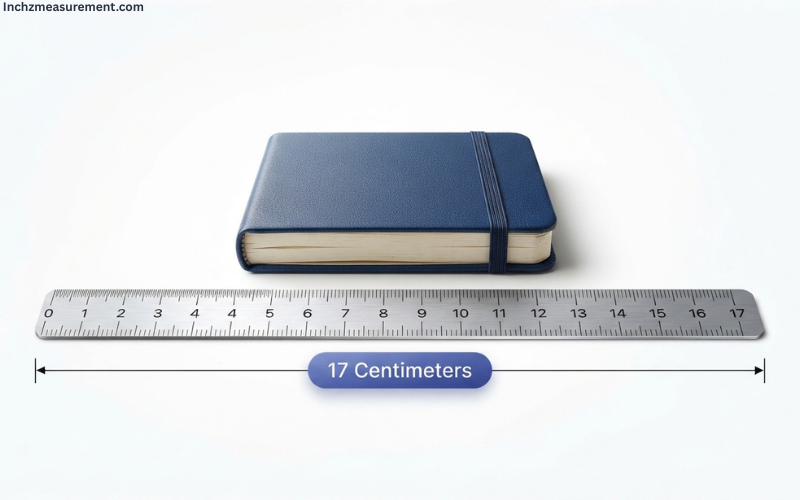
A compact notebook can have one side measuring around 17 centimetres. Notebook sizes are not completely standard, so this comparison depends on the particular design.
A notebook is especially useful because its flat edges make the measurement easy to visualise. Imagine the longer side of a small notebook extending 17 centimetres. It would be a little shorter than the 21-centimetre width of an A4 sheet of paper.
If you have an A4 sheet nearby, place the notebook beside its shorter edge. The 17-centimetre notebook would be about 4 centimetres shorter than the paper’s 21-centimetre width. This gives you a practical way to estimate the target without needing a specialised measuring tool.
Measurement Without a Ruler
You can estimate 17 centimetres without a ruler by using familiar objects, but these methods will only give you an approximation.
Use a smartphone. If your phone is close to 17 centimetres tall, place it against the object you want to measure. Check your phone’s specifications first if you need better accuracy. The height of different models can vary by several centimetres.
Use A4 paper as a reference. The shorter side of A4 paper is exactly 21 centimetres. Since 17 centimetres is 4 centimetres shorter, you can visualise the target as most of the way across the short edge of an A4 sheet.
Use your hand carefully. For some adults, the distance across part of the hand can provide a rough estimate, but hand dimensions differ widely. Avoid treating a finger or hand measurement as exact. It is best used only to develop a quick sense of the size.
Related Post: 10 Everyday Objects That Are About 16 Centimeters Big
FAQs
Is 17 centimetres the same as 6 inches?
No. 17 centimetres is approximately 6.69 inches, so it is about 0.69 inches longer than 6 inches. In millimetres, 17 centimetres equals 170 millimetres. If you are comparing the measurement with an object measured in inches, 6¾ inches is a useful rounded reference.
How big is 17 centimetres in inches?
17 centimetres is approximately 6.69 inches. Rounded to a simple everyday figure, you can think of it as about 6¾ inches. The exact conversion is 6.6929 inches, so it is slightly shorter than 7 inches.
What does 17 centimetres look like?
17 centimetres is a little more than half the length of a standard 30-centimetre ruler. It is also shorter than the 21-centimetre width of A4 paper. A smartphone, compact remote control or small notebook can help you visualise a similar length.
Is 17 centimetres a good size for a smartphone?
Some smartphones are close to 17 centimetres tall, particularly larger models. However, phone dimensions vary between manufacturers and models. Screen size is not the same as phone height because screen measurements are normally given diagonally. Check the handset’s listed height for an exact comparison.
How many millimetres are in 17 centimetres?
There are 170 millimetres in 17 centimetres. One centimetre contains 10 millimetres, so multiplying 17 by 10 gives 170 millimetres. This is useful when comparing measurements with products or tools that use millimetres rather than centimetres.
How can I measure 17 centimetres at home?
You can use a ruler, measuring tape or an object with a known dimension. A4 paper is useful because its shorter side is exactly 21 centimetres, making 17 centimetres about 4 centimetres shorter. A smartphone can also provide a rough comparison if its height is known.
Is 17 centimetres longer than 6 inches?
Yes. Six inches equals about 15.24 centimetres, while 17 centimetres equals about 6.69 inches. That means 17 centimetres is approximately 1.76 centimetres longer than 6 inches. The difference is small but noticeable when the two lengths are placed side by side.
Is 17 centimetres close to 7 inches?
Yes. Seven inches equals approximately 17.78 centimetres, so 17 centimetres is only about 0.78 centimetres shorter. In everyday situations, you can think of 17 centimetres as just under 7 inches, although the two measurements are not exactly equal.
Conclusion
17 centimetres is a manageable length that is easy to picture once you compare it with familiar objects. It equals 170 millimetres and about 6.69 inches, putting it just below the 7-inch mark. A smartphone, remote control, toothbrush, comb, small notebook or compact book can give you a useful visual reference, although their actual dimensions may differ.
For a quick mental image, picture most of the short side of an A4 sheet, which is 21 centimetres. Remove roughly 4 centimetres from that edge and you are left with about 17 centimetres. That simple comparison can help you estimate the measurement when a ruler is not available.