
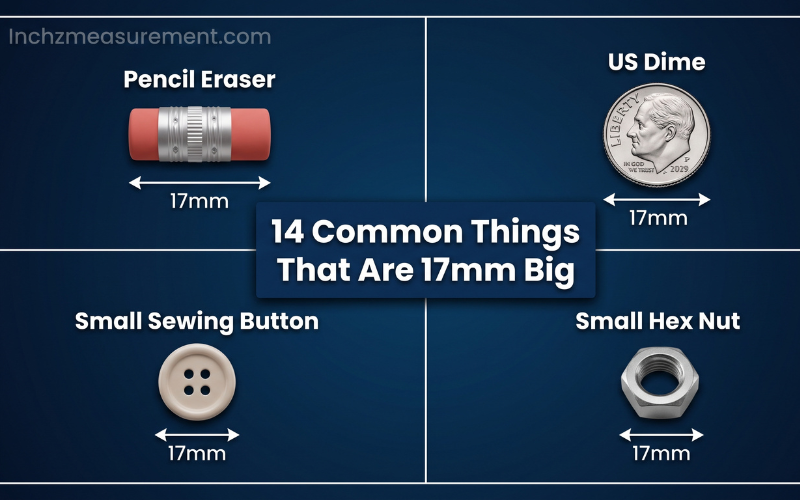
How Big is 17mm? A measurement of 17 millimeters is small enough to fit comfortably on the tip of a finger, yet large enough to appear in countless everyday products. While reading the number “17mm” is simple, picturing it without a ruler can be surprisingly difficult because our brains recognize familiar objects more easily than measurements.
A length of 17mm equals 1.7 centimeters or about 0.67 inches. This size is common in hardware, jewelry, electronics, stationery, and many household items. Comparing 17mm with objects you see every day provides a much clearer sense of its actual size.
17mm Conversion Table
| Measurement Unit | Equivalent |
| Millimeters | 17 mm |
| Centimeters | 1.7 cm |
| Inches | 0.669 in |
| Meters | 0.017 m |
| Feet | 0.0558 ft |
14 Common Objects That Are About 17mm Big
Finding it difficult to picture 17mm? Looking at familiar everyday objects makes this small measurement much easier to understand. From hardware and clothing accessories to household items and tools, many objects measure about 17mm in diameter, width, or another key dimension. The examples below provide practical size references, helping you quickly visualize 17mm without needing a ruler.
1. A 17mm Socket
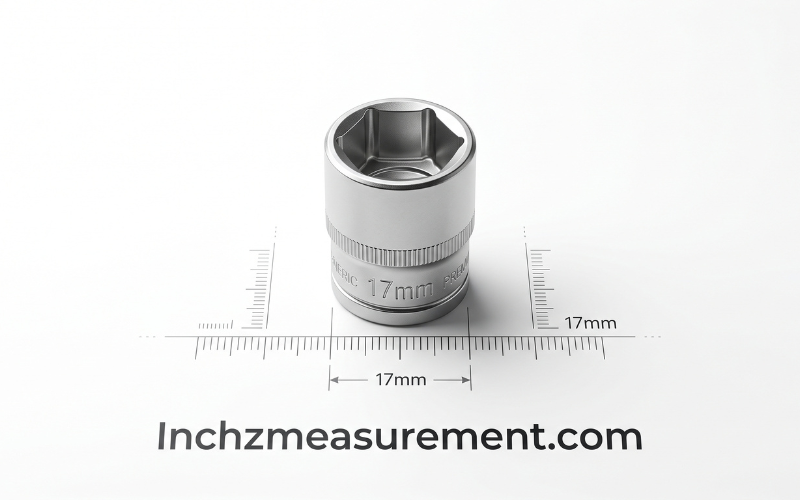
One of the easiest ways to picture 17mm is by looking at a 17mm socket from a standard metric socket wrench set. Mechanics frequently use this size when tightening or removing metric nuts and bolts found on cars, motorcycles, bicycles, and machinery.
Although the socket itself is much longer than 17mm, the opening is precisely manufactured to fit a 17mm fastener. If you’ve ever worked on a vehicle, you’ve probably handled one without realizing its exact measurement.
2. A Dime Coin Stack (Approximate Height)
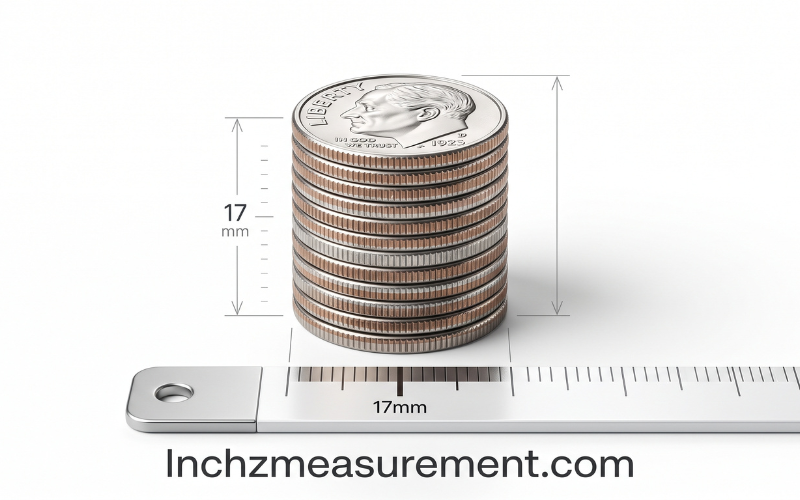
Stacking several U.S. dimes creates a height close to 17mm. Since one dime is approximately 1.35mm thick, a stack of around 13 dimes reaches nearly this measurement.
This comparison helps visualize vertical height rather than width. It also demonstrates how small measurements can quickly add up when multiple identical objects are stacked together.
3. The Diameter of a Standard Furniture Button
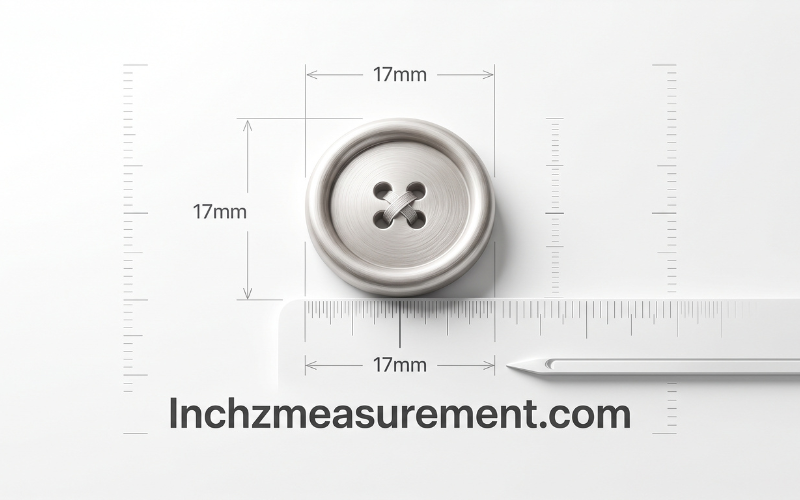
Decorative upholstery buttons used on sofas, chairs, and headboards are often manufactured in sizes close to 17mm.
Because manufacturers offer several standard diameters, not every furniture button measures exactly 17mm. Many, however, fall within the 16–18mm range, making them a useful everyday reference.
4. A 17mm Hex Nut
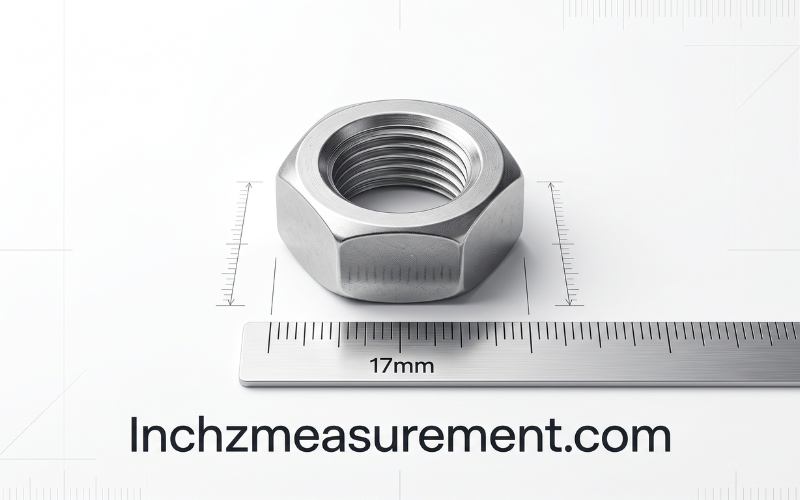
Metric hex nuts are identified by the size of the bolt they fit, but many feature outside dimensions close to 17mm across certain points depending on the standard used.
These nuts appear in construction projects, automotive repairs, machinery, and home improvement tasks. Their consistent manufacturing tolerances make them a dependable comparison.
5. Small Cabinet Door Knob Base
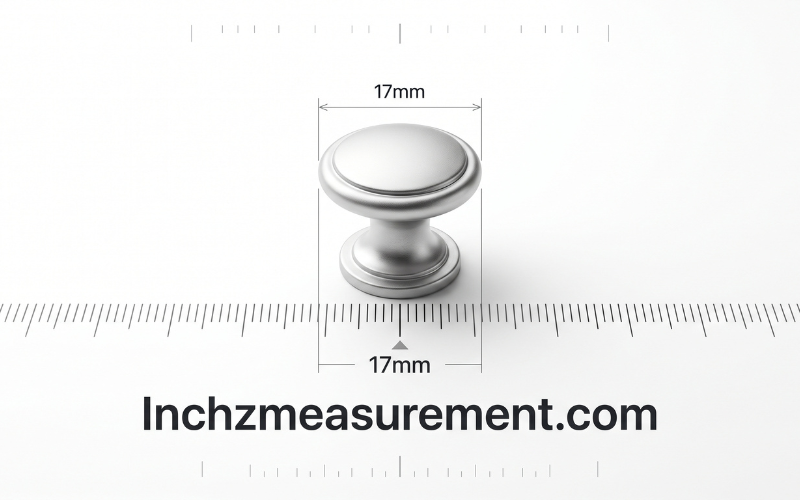
Many modern cabinet knobs have a decorative base measuring around 17mm in diameter.
Kitchen cabinets, bathroom vanities, office furniture, and bedroom dressers often use hardware in this size range. While the knob itself may be larger, its mounting base frequently measures close to 17mm.
6. Watch Crown on Large Wristwatches
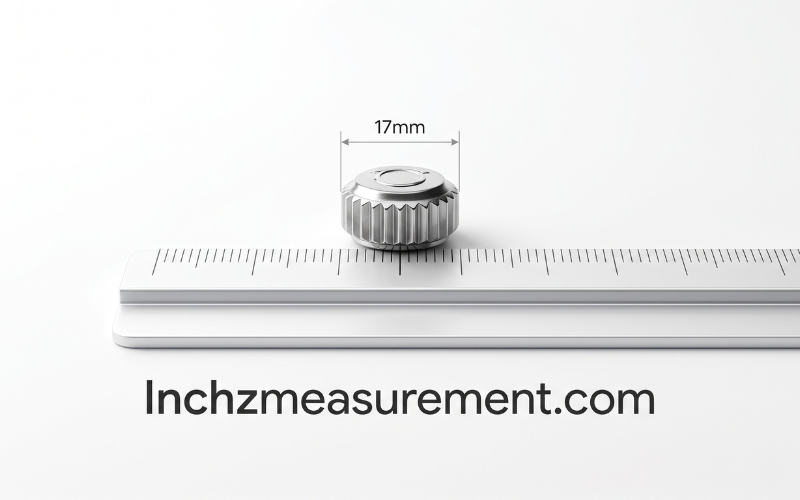
The crown is the small rotating knob on the side of a watch used for adjusting the time and date. On oversized sports watches, the protective crown guard and crown assembly together can measure close to 17mm across.
Not every watch uses identical dimensions, but premium dive watches and rugged outdoor models often feature noticeably larger crowns for easier handling.
7. A Large Shirt Button
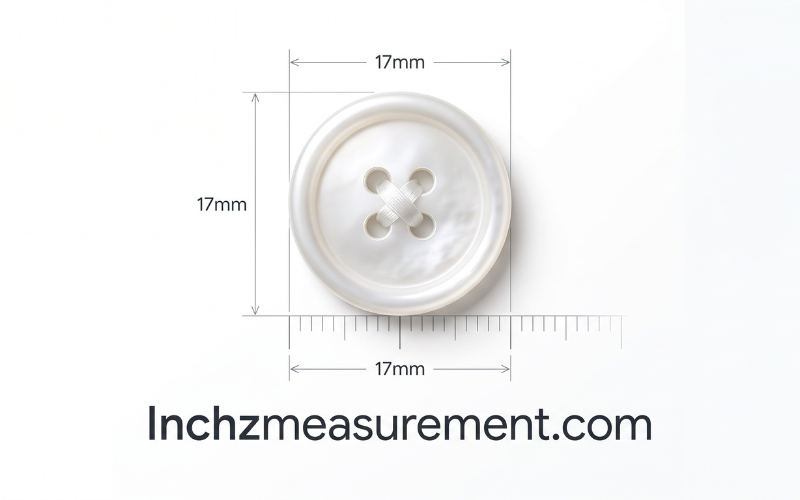
Large decorative shirt buttons found on winter coats, jackets, or fashionable overshirts are commonly produced in sizes around 17mm.
Unlike small dress-shirt buttons, these larger buttons are designed to stand out visually while remaining comfortable to fasten. Clothing manufacturers often use them where durability and appearance are equally important.
8. A Large Snap Fastener
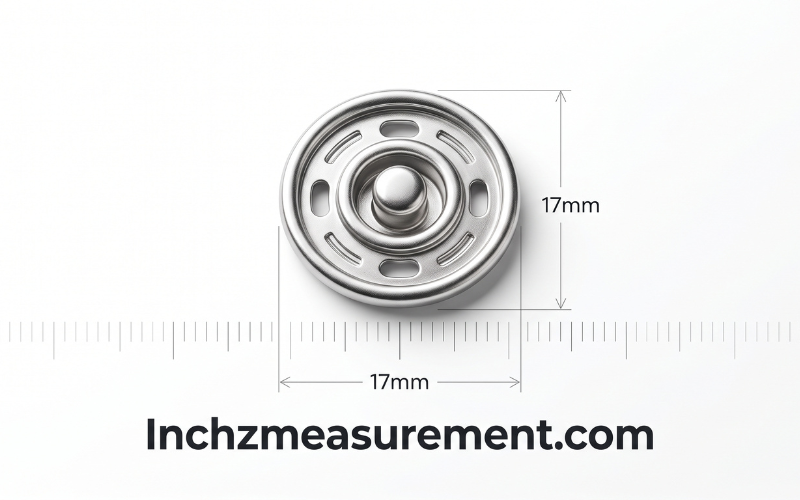
Heavy-duty snap fasteners used on leather jackets, handbags, backpacks, and outdoor gear often have a cap diameter close to 17mm. Their sturdy design allows them to withstand repeated opening and closing without losing their grip.
Although snap fasteners are available in several sizes, the 17mm version is popular for medium to heavy fabrics because it provides a secure hold while remaining easy to operate.
9. A 17mm Leather Hole Punch
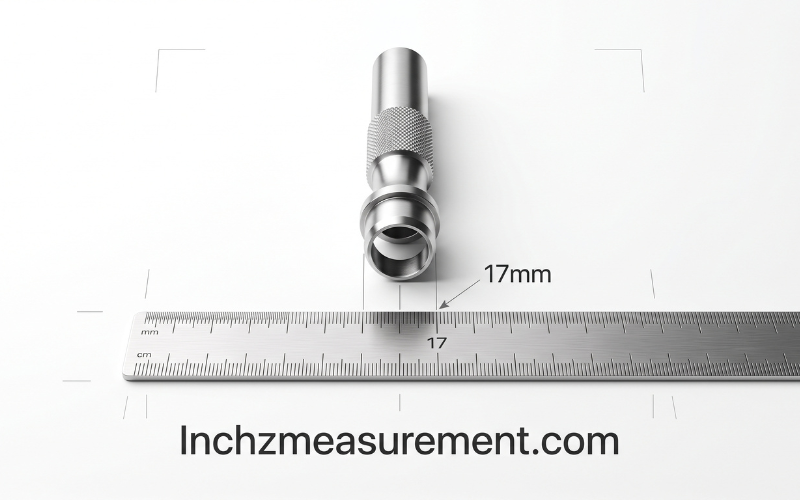
Leatherworkers frequently use 17mm round hole punches to create perfectly circular openings in leather, rubber, cork, and similar materials. This size is commonly chosen for decorative cutouts, belt accessories, and craft projects.
Because these tools are precision manufactured, they offer a reliable reference for visualizing exactly how wide 17mm is.
10. The Diameter of Some Curtain Grommets
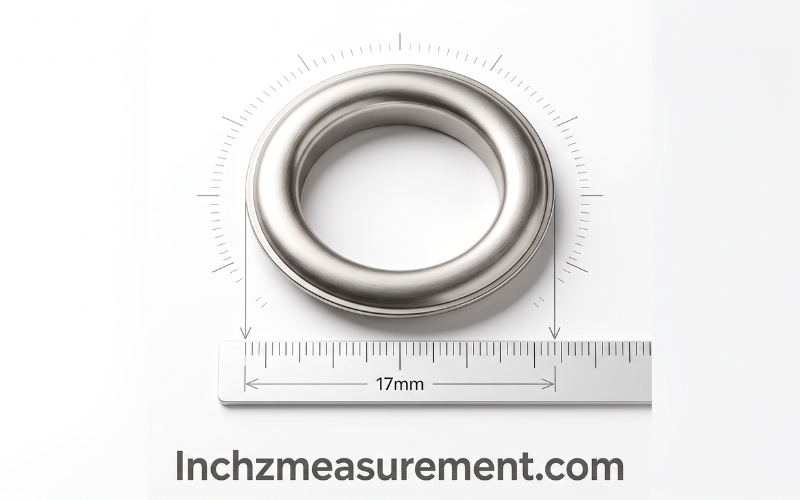
Many curtain panels include metal or plastic grommets that slide over a curtain rod. Depending on the design, the inner opening of smaller decorative grommets measures around 17mm.
Manufacturers produce these accessories in standardized sizes, making them a practical comparison when estimating small measurements.
11. A Medium Decorative Craft Pom-Pom
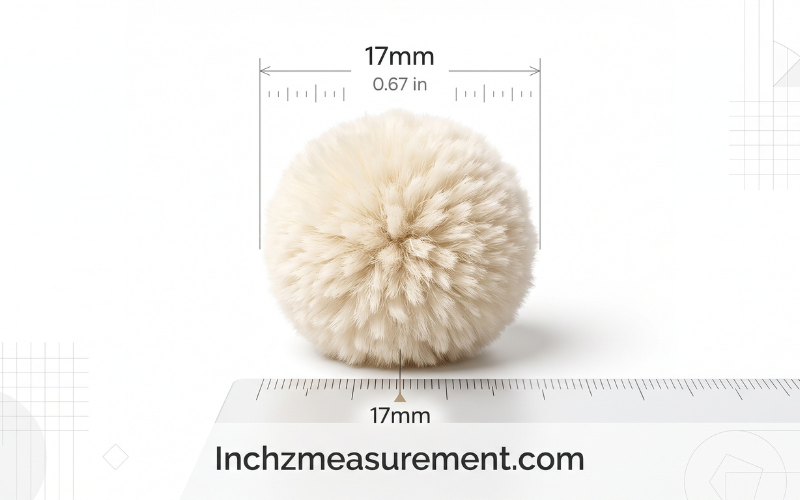
Craft stores sell pom-poms in many standard diameters, including sizes close to 17mm. They are commonly used for school projects, holiday decorations, handmade toys, and DIY crafts.
Since the fibers compress easily, the exact diameter can vary slightly, but many medium pom-poms are very close to this measurement.
12. A Rubber Chair Leg Cap
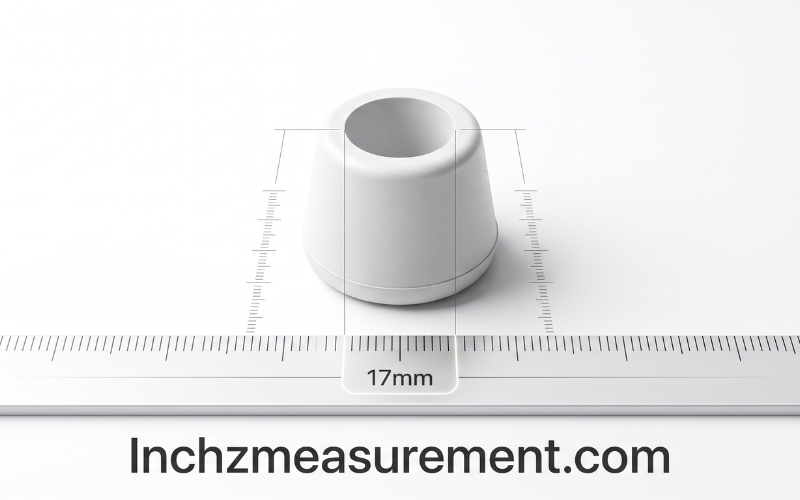
Rubber caps fitted to the bottoms of chair and table legs often have an inside diameter of approximately 17mm. These caps help prevent floor scratches while reducing noise when furniture is moved.
Because furniture tubing is manufactured in standard metric sizes, replacement caps are widely available in dimensions close to 17mm.
13. A Large Glass Marble
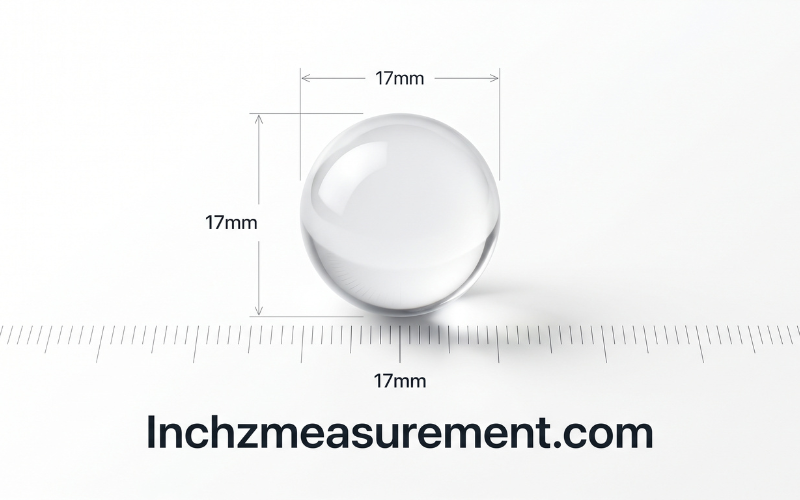
Although marbles come in numerous sizes, larger play marbles are often produced with diameters ranging from 16mm to 18mm. A marble measuring about 17mm gives a clear three-dimensional example of this size.
Its smooth spherical shape makes it easier to imagine the width of 17mm from every angle rather than viewing it as a flat measurement.
14. A 17mm Drill Bit
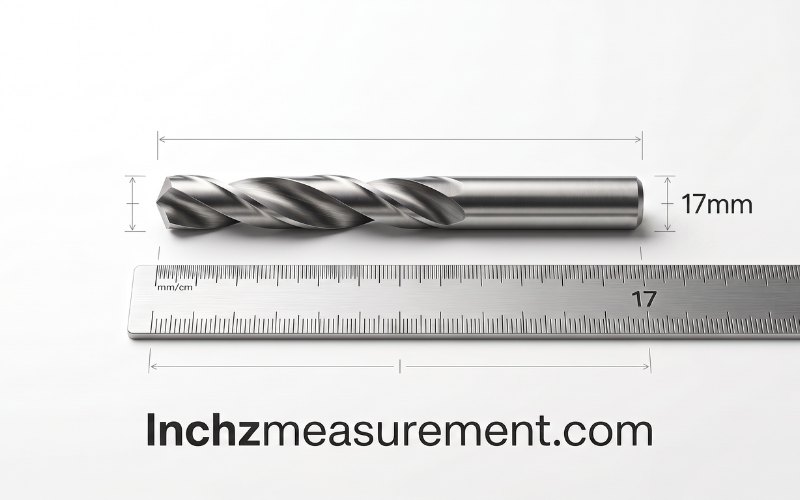
A 17mm drill bit is designed to create a hole exactly 17 millimeters wide in wood, metal, or plastic. These bits are commonly found in professional workshops, machine shops, and construction projects where precise hole sizes are essential.
Unlike approximate household comparisons, this is one of the most accurate references because the cutting diameter is manufactured to the stated size.
17mm Compared With Other Common Measurements
| Measurement | Difference from 17mm |
| 15 mm | 2 mm shorter |
| 16 mm | 1 mm shorter |
| 17 mm | Exact size |
| 18 mm | 1 mm longer |
| 20 mm | 3 mm longer |
Why 17mm Matters
A measurement of 17mm appears more often than many people realize. Engineers, mechanics, manufacturers, jewelers, furniture makers, and DIY enthusiasts regularly work with dimensions in this range because small differences can affect how parts fit together. Even a variation of 1 or 2 millimeters can prevent hardware from aligning correctly or cause components to wear out faster.
Outside industrial settings, 17mm is also found in fashion accessories, home hardware, stationery, crafts, and electronics. Becoming familiar with this measurement makes it easier to estimate sizes when shopping online, choosing replacement parts, or completing home improvement projects without constantly reaching for a ruler.
Frequently Asked Questions
What does 17mm equal in inches?
A measurement of 17mm is approximately 0.669 inches, which is just under 11/16 of an inch.
Is 17mm the same as 1.7 centimeters?
Yes. Since 10 millimeters equal 1 centimeter, 17mm converts exactly to 1.7cm.
What can I use to measure 17mm accurately?
A metric ruler, digital caliper, or measuring tape with millimeter markings will provide the most accurate measurement. A digital caliper is the best choice for precision work.
Is 17mm a common metric size?
Yes. The 17mm size is commonly used in automotive tools, hardware, furniture fittings, plumbing components, and manufacturing because it matches many standard metric parts.
Can I estimate 17mm without a measuring tool?
You can make a reasonable estimate by comparing it to familiar objects such as a 17mm socket, a large coat button, or a 17mm drill bit, though these comparisons are only approximate.
Is 17mm larger than 1/2 inch?
Yes. Since 1/2 inch equals 12.7mm, a measurement of 17mm is noticeably larger by 4.3mm.
Which professions commonly work with 17mm measurements?
Mechanics, engineers, carpenters, plumbers, furniture manufacturers, machinists, and leatherworkers frequently use 17mm measurements in their daily work.
Why is knowing the size of 17mm useful?
Understanding this measurement helps when buying replacement parts, selecting tools, reading product specifications, completing DIY projects, and comparing the dimensions of everyday objects.
Conclusion
How Big is 17mm becomes much easier to understand when it is compared with familiar objects instead of numbers on a ruler. Items such as a 17mm socket, drill bit, cabinet hardware, snap fastener, chair leg cap, and large button provide practical references that you may already have around your home or workshop. These comparisons help transform an abstract measurement into something you can picture instantly.
Knowing the approximate size of 17mm is useful whether you’re purchasing hardware, replacing furniture parts, selecting craft supplies, or checking product dimensions online. The more everyday references you recognize, the quicker you’ll be able to estimate this measurement accurately without needing a measuring tool.